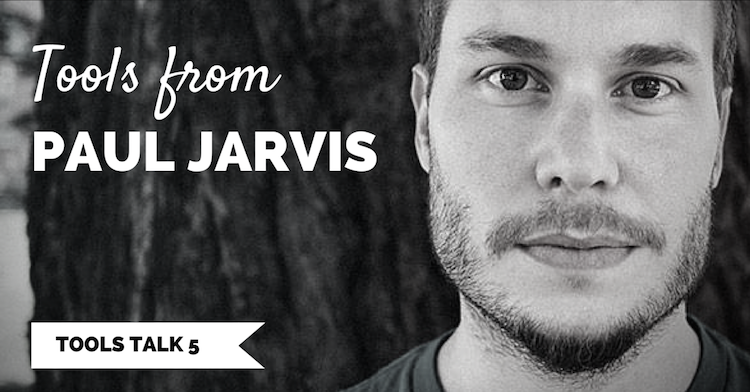
TT 005: Paul Jarvis on Creativity, Focus and Making Space
“Creativity is acting on the ideas that you have”.
[ Tweet this ]
In this episode I talk with Paul Jarvis. Paul is a web designer, best-selling author & gentleman of adventure. Paul is real and rough, like nature. Paul gets the work done and writes about this interesting beast called creativity.
In this 32-minute episode Paul and I discuss:
• what he says when people ask what he does
• how he defines success
• what he does to get out of a funk and a big funk
• why he needs space and breaks to get the work done
• why he focuses on direction and habits
• how creativity works for him and what it is
• how to be a creative entrepreneur
• his advice to live healthy, simple and improve your relationships
• his essential stuff, books, apps and music
// Listen with iTunes
// Download
“You have to change your paradigm from consumption to creation. Then the possibilities are limitless”.
[ Tweet this ]
Everything I Know by Paul Jarvis
The Good Creative by Paul Jarvis
The Creative Class
Paul’s Social Sabbatical
The War of Art by Steven Pressfield
Think and Grow Rich by Napoleon Hill
James Altucher
Alain de Botton Tweet
IA Writer Pro
1Q84 by Haruki Murakami
Trust me I’m Lying by Ryan Holiday
Creativity for Sale by Jason Zook
Trialogue by Colin Wright
Owen Beverly - Shooting the Bull
Noah Gundersen - Ledges
Mojave - Rainy Ghost
Seth Godin
Invisible Office Hours // a podcast by Paul and Jason
Subscribe here for Tools Talk updates!
Paul: Hey,hey,hey!
Jelle: Ik heb twee van je laatste boeken gelezen, The Good Creative and Everything I Know en ik vond ze echt goed. Ik volg je al een hele tijd. Op het ogenblik je blog en al je verhalen over een creatieve ondernemer en het creatief ondernemerschap. Daar wil ik me op richten in deze podcast, op de creatieven. Jij bent daar een belangrijke van. Ik wil beginnen met de vraag die je misschien, of misschien niet, vaak krijgt en die is: Wat zeg je, Paul, als mensen je vragen wat je doet?
Paul: Je pint me er toch niet op vast, hè? Wat ik zo ongeveer doe verandert van dag tot dag, van week tot week, van maand tot maand, van jaar tot jaar. Zo’n drie, vier jaar geleden was ik nog geen schrijver maar nu ben ik dat wel. Vijf maanden geleden stelde ik nog geen cursussen samen en nu doe ik dat wel. Dus het verandert een beetje.Maar wat ik in feite doe – en het varieert op wat voor manier ik dat doe – is dat ik creatieve mensen help beter met hun onderneming om te gaan. En dat is het wel zo’n beetje. En het zou boeken schrijven kunnen zijn, of artikelen, of cursussen, wat dan ook, maar voor mij altijd iets in die geest. Het komt altijd neer op creatieve mensen helpen beter te worden in het werk dat ze doen, of het nu een zakelijk karakter heeft of
iets anders is. Maar dat is het wel zo’n beetje, denk ik.
Jelle: Mooi. Dus altijd is de service, het helpende stuk, echt belangrijk voor je.
Paul: Ja, absoluut. Niet dat dat nou precies is waarom ik het doe. Dat is ook een belangrijk punt. De reden waarom ik dat allemaal doe is om te helpen.
Jelle: Prachtig. En hoe definieer jij succes?
Paul: Dat is nogal verschillend geweest, denk ik. Toen ik jong was, tussen de twintig en dertig, ging het allemaal om geld. Dus dacht ik, als ik een miljoen dollar per jaar kan verdienen, dan heb ik succes. Maar toen ik daar een paar maanden mee bezig was, dacht ik: Hè, ik geef eigenlijk helemaal niet zoveel om geld. Ik geef er genoeg om zodat ik mijn rente of hypotheek kan betalen, eten kan kopen en comfortabel kan leven, maar verder maak ik me er niet zo druk om. Dus mijn eerste gedacht over succes was verkeerd en het motiveerde me zelfs niet eens.
Nu denk ik dat het gewoon neerkomt op zoiets van ‘gelukkig zijn’, maar wel kritisch blijven. Dus tevreden zijn met waar ik mee bezig ben, maar me altijd afvragen of het thema waar ik mee bezig ben nog steeds waarde voor me heeft en me nog altijd gelukkig maakt. Zoiets. Dus denk ik dat succes echt afhangt van of je je dat afvraagt en gelukkig bent.
Jelle: Altijd zoeken naar geluk in je werk. O.K. Nou, Tools Talk gaat over een aantal mindset tools. Ik ben echt benieuwd naar jouw perspectief en wat je doet wanneer je in de put zit, heel erg in de put. Wat je dan doet om daar weer uit te komen.
Paul: Maak een wandeling in de natuur. Het is tamelijk veel …eh.. ik kom er altijd op terug en ik woon ook typisch altijd ergens waar dat kan, want het is heel anders dan in de stad. Maar ik hou er duidelijk van om zo’n beetje in de wildernis te wonen en ik merk dat simpelweg wandelen in de natuur echt helpt. En ik vind het creatief ook. Het lijkt onnatuurlijk als je ergens aan werkt en je zit vast, dan wil je niet stoppen, maar eraan werken, je wil doorgaan, nietwaar?
Maar ik ben erachter gekomen dat een pauze inlassen het beste resultaat oplevert. Dus als ik vastzit…., als ik iets schrijf en vastzit, dan moet ik een pauze nemen om daarvan los te komen. Ik kan gewoon niet steeds hetzelfde doen en dan aldoor hetzelfde resultaat behalen, alsof ik nooit vastzat.
Dan moet ik eigenlijk stoppen waarmee ik bezig ben, zelfs al is het maar 5 of 10 minuten, weet je. En dan gaat het weer, met een frisse blik en een helder hoofd of wat dan ook, en dan zie ik mezelf ook min of meer in een ander licht en ben ik hopelijk in staat uit die put te komen
Jelle: En als je in een hele nare stemming bent?
Paul: Dat is nou grappig, want ik heb net een paar maanden afstand genomen van de social media en ik ben net een paar dagen terug, hoewel nog niet helemaal..
Jelle: Welkom terug (… lacht..)
Paul: Ik merkte (..lacht..) dat ik voor grotere dingen die ik onderneem, langere pauzes moet inlassen. En zelfs bij …eh.., ik ben een grote voorstander van consistentie, een vaste lijn, en dat is waarschijnlijk …. mijn grootste investering om creatief te zijn. Hoe meer je die vaste lijn aanhoudt. Maar ik merkte ook.., zoals veel mensen dat hebben, dat ze dan zoiets zeggen als: o.k. ik leg me erop toe 500 woorden per dag te schrijven, ik leg me erop toe 1000 woorden te schrijven…en het vreemde is dat ik dat ook doe. Maar ik denk, als ik met heel ingewikkelde dingen bezig ben en als ik dan op een gegeven moment merk dat ik verveeld raak en me dingen begin af te vragen en niet met afdoende antwoorden kom, dat ik dan moet stoppen.
Dus zo ben ik ook een paar maanden gestopt met schrijven en heb een pauze ingelast.
Ik heb zelfs een paar maanden geen nieuwsbrief gestuurd, want ik had gewoon behoefte aan een langere pauze en ik had die ruimte nodig om op nieuwe dingen te komen en te zien of ik in de toekomst door wilde gaan met waar ik mee bezig was.
Dus ik vind dat ik dan een stap terug moet doen en langere pauzes in moet lassen, net als zoveel mensen doen. Zelfs met het werken voor klanten doe ik dat. Ik neem soms wel eens 6 maanden vrij. Maar ik heb die ruimte nodig om afstand te nemen van waar ik mee bezig ben om te zien of ik nog iets anders wil doen of dat ik mijn passie voor iets terug krijg. In het bijzonder in het werken met klanten. Ik merk dat 6 maanden werken en 6 maanden vrij mij heel erg ten goede komt, want na 6 maanden denk ik: Oh, wat haat ik dit; ik geloof niet dat ik dit nog langer wil. En als ik dan 6 maanden vrij ben, begin ik het werken voor mijn klanten te missen. Ik mis het dan om mensen te helpen of grotere projecten en maandenlang aan een stuk te werken aan hun zaak en het maken van een website. Ja, dan mis ik dat. Dus hoe dieper de put, hoe langer de pauze die ik moet nemen.
Jelle: Ik moet je wel zeggen dat ik je een beetje mis in de social media. Ik denk dat dat ook geen goed teken is bij jou. Maar ja, ik begrijp het wel. Net als bij mij, toen ik twee maanden naar Brazilië ging in 2011. Ik had een boek bij me, Think and Grow Rich van Napoleon Hill. Voor mij was dat een lange tijd. Toen ik terug kwam, had ik een brandend verlangen om allerlei dingen te gaan doen en dat was ook de tijd dat ik met mijn blog begon.
Maar ik denk ook dat het ’t beste is een pauze in te lassen, een wandeling te maken of zelfs langer vrij te nemen zoals jij dat doet. Wat deed je in de tijd dat je vrij had genomen. Waar richtte je je op?
Paul: Ik focuste me op het scheppen van ruimte en stond mezelf toe me te vervelen en andere dingen te proberen netals de laatste keer. Dat had meer te maken met afstand nemen van social media en nieuwsbrieven en alle dingen die ik opbouw en het bijhouden van mijn eigen onderneming. Dus tijdens deze onderbreking was ik bezig met werk voor klanten waarvan ik daarvoor een poos afstand had genomen en dat ik pas in september weer opgepakt heb.
Dus daar richtte ik me meer op. Ik heb net een cursus uitgebracht die de Creative Class heet.
Dus, ik doe absoluut…. Ik wil daar geen afstand van nemen omdat ik het net heb uitgebracht en er dan interactie is tussen mijn studenten en mij. Dus daar wilde ik absoluut geen afstand van nemen. Ik werkte heel veel met mijn studenten uit die cursus en met klanten.. Dus ik was er echt op gericht uit de schijnwerpers te stappen, want daar hou ik sowieso niet van. Dus doe ik dan niets zoals nu, interviews geven of nieuwsbrieven of tweets enzo. Maar ik hou er ook van om een stap terug te doen en te werken aan het helpen van anderen zonder in de schijnwerpers te staan, waar ik me uiteindelijk veel beter bij voel.
Jelle: Ja. En ook je vervelen maakt je creatief?
Paul: Hm,hm Ja. Het maakt ruimte vrij in je hoofd om aan nieuwe dingen te denken. Want echt, we zijn allemaal verslaafd aan onze fijne kleine zakcomputers,. We hebben vaak maar 30 seconden over voor iets en iedereen gaat erin mee; we pakken onze telefoon, we updaten onze social media of e-mails en staan onszelf niet toe ruimte in ons hoofd te maken. We staan onszelf niet toe ons te vervelen. En nu juist, typisch uit die verveling komen nieuwe interessante ideeën voort.
Jelle: Voor die tijd was je gericht op het schrijven van 500 woorden per dag. Dat lijkt meer op een systeem. Gebruik je tools om doelen, systemen of gewoonten te bewerkstelligen.
Paul: Nee, van geen van die dingen ben ik een fan. Ik heb absoluut geen doelen. Ik richt me … Eigenlijk is het die gewoonte/routine. Ik hou er niet van die gewoonten ten doel te stellen, omdat ik dat veel te concreet vind. Ik beweeg me liever in een bepaalde richting en stel dan zoveel mogelijk vragen bij die (gekozen) richting om te kijken of het werkt. Zoals ik al zei aan het begin, toen ik als doel had het halen van een miljoen dollar per jaar, wat zo stom was. Maar ik heb nu gemerkt dat ik zo’n beetje blind ben voor zoiets. Ik werkte 16 uur per dag. En nu doe ik alleen zoiets van… dat ik me afvraag of dit nou eigenlijk wel of niet is wat ik wil.
Dus nu focus ik me alleen op richting. Maar dat is absoluut een betere gewoonte voor me en ik denk dat …. - ik weet niet of je Steven Pressfield’s ‘War of Art’ hebt gelezen en met name dat waar hij voor pleit en waarvoor ik altijd heb gepleit - hoe meer je je wijdt aan je creativiteit, hoe creatiever je wordt, nieuwe ideeën krijgt en er iets uit voortkomt. Dus het schrijven van boeken, een schilderij maken of foto’s nemen enzo, hoe meer je je daarvoor openstelt, hoe creatiever je wordt. the more you receive?? that you sit down in your chair and get to work??, hoe meer je creativiteit bij je zelf opmerkt die je kunt delen met anderen. Dus ik ben een grote fan van ’doe- niets’. Ja zelfs nu, - en ik schrijf nu al een paar jaar zo ongeveer“professioneel”, ja, tussen aanhalingstekens, want ik weet niet eens wat dat betekent.
Maar… ja.., als ik schrijf dan probeer ik zoveel mogelijk te schrijven.
Als ik ontwerp, dan probeer ik zoveel mogelijk te ontwerpen. Dus dan doe ik die dingen als routine. En maak er een soort gewoonte van. Dan doe ik dat tot ik zoiets als een lange onderbreking nodig heb, waarover we het al hadden. Maar ik doe dat zo vaak mogelijk, want dat is de enige manier die ik ken om te weten hoe je beter kunt worden in iets. Toen ik begon te schrijven wist ik niet… Ik was geen schrijver omdat ik nog niet met schrijven begonnen was. Dus de enige manier om een beter schrijver te worden was om te schrijven. En dan meer te schrijven, en nog meer en nog meer. Zoiets.
Jelle: Wow, en tijdens het schrijven, zet je dan internet uit?
Paul: Eh.., nee, want ik heb verder niets anders aan staan. Ik ben een groot voorstander van …, wij vinden niet dat we geweldig zijn in multitasking (meer taken tegelijkertijd doen). We zijn allemaal sch..tziek van multitasking (..ze lachen allebei..). Dus waar ik ook aan werk, dat is het enige dat aan staat. Dus nu praat ik met jou op Skype en Skype is het enige dat aan staat. Ik heb absoluut geen meldingen op mijn computer of op mijn kleine pocketcomputer, mijn telefoon of mijn iPad, dus als ik op ‘social’ ben, dan is dat het enige dat aan staat.
Als ik ontwerp, dan is Photoshop het enige dat aan staat. Als ik schrijf, dan is dat het enige wat aan staat. Dus, een ding tegelijk. Als ik dat zou onderbreken als ik 6 of 7 uur zou zitten schrijven, dan denk ik niet dat ik erg productief zou zijn. Maar ik leg kleine sprints af, sommige mensen noemen dat poppedore of palmadore of zoiets, dat weet ik niet precies. Dat is zoiets als een methode van sprints rond de 30 tot 40 minuten, even rusten en dan nog zo’n sprint doen. En ik vind dat echt wat bij mij het beste resultaat oplevert. En de beste resultaten ontstaan door je gewoon te richten op één ding, dat uit te voeren en als je een pauze nodig hebt, dan neem je die vijf minuten, dan doe je iets anders met alleen dat schrijfprogramma aan en dan ga je terug naar waar je mee bezig was of je begint met iets anders. Dus ik ben echt geen fan van multitasking, want daar heb ik de pest aan..
Jelle: Dus, single-tasking (één taak tegelijk) aldoor.
Paul: Ja.
Jelle: Mooi. Een van je beste quotes in het boek ‘Everything I Know’ was dat je je paradigma van consumeren moet omzetten naar creëren. Dat dan de mogelijkheden eindeloos zijn en dat is ook wat je nu zegt, want …. voor mij is dat ook heel belangrijk: creëer meer, consumeer minder.
Zou je me kunnen zeggen hoe creativiteit voor jou werkt?
Paul: Ja. Dat is een interessant ‘beest’, die creativiteit. Het is werkelijk zoiets van.., je hebt een idee en doet daar iets mee. Want ideeën op zichzelf stellen niets voor. Ideeën zijn in feite …. Ik kan soms zeggen: oh, jaren geleden had ik al een idee en daar was dat miljardenbedrijf waar ik maar omheen draaide…. Domme pech…!
Als ik er nu niet op reageer, als ik nu niets met deze ideeën doe, dan ben ik niet creatief. Je kunt een hoop ideeën hebben; dat is fijn voor je, maar daar komt niets uit als je er niet echt iets mee doet. Dus ik vind dat creativiteit betekent: actie ondernemen op de ideeën die je hebt. Zo simpel is het eigenlijk. (..lacht..) Het lijkt wel op een nieuwe quote, die ik ergens voor kan gebruiken.
Creativiteit is actie ondernemen op de ideeën die je hebt.
Ik denk dat dat echt belangrijk is en het onderscheidt me van anderen om met iets te komen en er dan actie op te ondernemen. In plaats van dingen die je nu eenmaal doet en vervolgens is het af.
Bij creativeit komt er iets meer bij kijken, het nemen van een extra stap.
Ik denk dat dat het zo moeilijk maakt voor sommigen. Maar ik denk dat iedereen creatief kan zijn. Ik geloof helemaal niet dat alleen sommige mensen creatief zijn en anderen niet. Ik denk dat sommige mensen gewoon te bang zijn om actie te ondernemen op hun ideeën en dat andere mensen dat tóch doen ookal zijn ze bang.
Jelle: Ja. Dat brengt me op een andere vraag. Wat zou je zeggen tegen een jong persoon die je vraagt: Paul, ik wil creatief ondernemer worden. Hoe doe ik dat?
Paul: (..lacht..) Ik zou zeggen, als je dat wilt, dan doe het! Zoals ik…ik begon zo ongeveer 17 jaar geleden ongeveer voor mezelf te werken aan creatieve dingen, en in die tijd werkte niemand voor zichzelf. Ik kende niemand anders die freelancer of zelfstandige was. Als ik mensen vertelde dat ik voor mezelf werkte, dan zeiden ze: maar wat is eigenlijk je beroep. Ik zei wel eens dat ik ook muzikant was, dus als ik mensen vertelde dat ik muziek maakte zeiden ze: oh nee, ik bedoel, wat doe je voor werk? Dus toen ik begon met zelf creatief werk te doen, zagen de mensen dat niet als baan. Zelfs op school, heel vroeger, als ik zei dat ik iets creatiefs wilde doen – dan zei de leraar zoiets van “hier is het boek: hoe word ik ingenieur” of zoiets. Ik deed korte tijd een opleiding om een graad in de IT te halen.
Toen besefte ik dat dat niets voor mij was en ben ik er tamelijk snel mee gestopt. Maar ik denk dat als je iets wilt doen, doe het dan, probeer het, en denk eraan dat de enige manier voor jou om te weten of het zal werken of niet is om het te proberen. Nogmaals, daarom : idee > pijltje naar rechts actie. Als je het idee hebt creatief te willen zijn, dan gebeurt het in ieder geval niet zolang je er geen actie toe onderneemt. De enige manier om garantie te krijgen op de mogelijkheid van succes is om het te proberen. Anders garandeer ik je alleen maar dat je niet zult slagen. Als je het niet probeert garandeer ik je dat er niets gaat gebeuren.. Terwijl, als je het probeert, dan zou je kunnen slagen. Wie weet? Ik weet het niet (..lacht..).
Jelle: Ja. En wat als je zelfs niet weet wat je voor creatieve talenten hebt?
Paul: Ik denk dat datgene uitvinden, onderzoeken, het belangrijkste is. Zoals ik niet wist hoeveel ik van schrijven hield. Ik begon gewoon te experimenteren met schrijven. Nu experimenteer ik met het maken van houten meubels. Ik weet niets van het maken van houten meubels, maar dat is ook weer zoiets. .. Ik zal er wel verschrikkelijk slecht in zijn, maar .. ik weet het niet, omdat ik het nog nooit heb geprobeerd. Ik ben er een paar weken geleden mee begonnen dingen te maken en het resultaat is nog niet zo denderend, omdat ik niet precies weet wat ik doe, maar ik leer ervan en ik zoek het uit. Ik probeer dingen, dus ik denk dat ik een open geest heb om te experimenteren en fouten te maken en dat is waarschijnlijk het belangrijkste. In het bijzonder als je net begint dan maak je fouten, tenzij je het geluk aan je kont hebt hangen. Dingen die je probeert te doen, werken in het begin niet altijd zoals jij dat wilt. Dat betekent niet dat je ze niet zou moeten doen. Het betekent gewoon dat je moet leren en zien of het iets voor je is om te doen of iets waar je goed in bent en als het dat niet is, dan probeer je iets anders.
Ik heb zoveel dingen geprobeerd door de jaren heen en sommige daarvan werken en sommige niet en dat maakt mij niets uit.
Ik blijf gewoon…eh… zolang als ik het kan blijven proberen – en het is meen ik James Altucher die zei dat je niet bang moet zijn om nieuwe dingen te proberen,
omdat het ergste dat je kan gebeuren nooit het slechtste scenario is. Je zult nooit meemaken je niet langer nieuwe ideeën kunt proberen, of je moet dood gaan - (..ze lachen..)
Maar met de meeste dingen zoals wanneer je denkt dat je iets creatiefs wilt doen, daar ga je door te experimenteren niet dood aan. Tenzij je wilt schilderen terwijl je aan het sky-diven bent met een erg kleine parachute of iets dergelijks!
Dat is duidelijk niet het slechtste scenario om iets creatiefs te proberen.
Als het dat wel is, dan is het wel een heel extreem soort van creativiteit. Maar dan wordt het waarschijnlijk een hele andere podcast (..lacht..)
Jelle: (..lacht…) Leuk! Gebruik je tools om productiever te worden en/of beter te leven?
Paul: Ja (..lacht..) mijn tool is ‘focus’. Mijn tool is: niet meer te gebruiken dat een ding tegelijk of juist proberen me te richten op meer dan een ding tegelijkertijd.
Want ik denk: Hoe meer je met je aandacht bent bij dat waar je aan werkt, – en ik zeg dit ook aan het eind van mijn boek ‘Everything I Know’ - hoe meer je aandacht
als een geschenk aan je werk kunt beschouwen.
Wat ik daarmee bedoel is dat, als je er klaar voor bent en je bent 100% gefocust op je werk en niet op iets anders, en je denkt niet aan de toekomst, aan resultaten of nog 50 andere dingen, of al die kleine rottige pop-ups op je scherm…. Als je je volledig focust op je werk dan is dat het grootste geschenk dat je kunt geven aan dat werk. Het is die focus en die aandacht.
Jelle: Je weerstand verslaan (zoals Steven Pressfield het noemde)….
Paul: (..lacht..) Precies.
Jelle: Op je gat zitten. Ja. Heel mooi. O.K. We gaan nu aan een round-up beginnen. Een paar korte vragen. Probeer er een quote voor te vinden, zoals toen we het over creativiteit hadden.
Paul: Dat is goed.
Jelle: Wat is advies nummer 1 voor iemand die zijn relaties wil verbeteren.
Paul: Werk eraan!
Jelle: Ja. Is dat het?
Paul: Ja, dat is het echt. Het doet er niet echt toe wat voor soort relatie het is. Tenzij je er aan werkt, gaat er niets gebeuren.
Jelle: Een quote van Alain de Botton, je weet wel, hij is van The School of Life.
Paul: O.K. ja.
Jelle: Ken je hem?
Paul: De naam komt me bekend voor, ja.
Jelle: O.K. hij zei op Twitter, ik denk dat het was ja: de beste manier om te genezen of lief te hebben is om een hoop tijd met iemand door te brengen. Dat is echt ‘cool’. Werk eraan en besteed er een heleboel tijd aan.
Jelle: Wat is je nummer 1 advies aan iemand die heel druk is met een heleboel stress?
Paul: Ik zou zeggen dat prioriteiten stellen de sleutel is. Mensen zijn alleen druk als ze de prioriteiten in hun leven verkeerd stellen.
Als je ‘nee’zegt tegen vanalles en je enkel richt op dat waar je je in feite op moet richten, dan is er genoeg tijd. Dat heb ik in mijn eigen leven ondervonden.
Jelle: Wat is jouw nummer 1 advies om eenvoudig te leven?
Paul: (…lacht..) Zeg gewoon ‘nee’tegen zoveel mogelijk.
Jelle: Ja. Wat inspireert je het meeste op dit moment?
Paul: De natuur! Ik ben pas verhuisd/ Ik woon nu zelfs dieper de bossen in dan daarvoor. En ik kan al die immense ceders nu zo vanuit mijn raam zien en dat inspireert me totaal.
Jelle: Wow. Blijf je daar wonen?
Paul: Ja
Jelle: O.K. Gefeliciteeerd!
Paul: Dank je!
Jelle: 3 Essentiële dingen. Als je die zou moeten kiezen, welke zouden dat dan zijn.
Paul: Het is bedroevend om te zeggen, maar een ervan zou absoluut mijn computer zijn. Dat is zeker. En een guitaar. En misschien een cirkelzaag.
Jelle: (..lacht..) voor de houten meubels.
Paul: Precies. Ik wil daar echt niet mee stoppen.
Jelle: 3 apps.
Paul: Ik ben daar eigenlijk niet zo voor. Eh.., waarschijnlijk iAwriter, Safari en Photoshop. Nogal saai, maar dat gebruik ik het meeste.
Jelle: Wat is iAwriter?
Paul: Eh.. dat is een ..wacht even . er is een website van: writer.pro
Jelle: Het is een tool om te schrijven?
Paul: Precies. Het is in feite een tool om je te focussen op schrijven, zodat je niets anders kunt doen dan schrijven en vanwege mijn ontwerpprogramma. Het houdt er niet van dat je je font, de kleuren of de indeling of wat dan ook verandert. Het laat je alleen maar schrijven in Markup en het scherm laat je alleen de woorden zien die je hebt geschreven en niets anders. Ik hou daarvan met schrijven en dat is ook waar ik alles in zet voor het eerste concept.
Jelle: O.K. Heb je Scrivener wel eens gebruikt?
Paul: Ik heb het geprobeerd. Maar er zitten zoveel mogelijkheden op,zoveel toeters en bellen.
Ik schrijf niet speciaal om een boek te publiceren. De manier waarop ik het doe is misschien langzamer en misschien inefficiënter, maar het is de manier waarop ik boeken van het begin naar het einde volg op het gebied van de software die ik gebruik.
Dat werkt voor mij het beste. Dus ik verander het echt niet. Ik schrijf het concept, dan zet ik het in Google Docs, zodat mijn redactie en ik er gelijktijdig aan kunnen werken en dan voer ik het in in InDesign of Pages of wat dan ook om er een PFE/ePub/Mobi van te maken.
Jelle: O.K. dus je zet het om van Pages naar ePub?
Paul: Ja, precies. Of, als ik meer design nodig heb, dan gebruik ik gewoon InDesign.
Maar als het gewoon tekst is dat gebruik ik meestal zoiets als de Apple Pages app en dan kan ik ePub omzetten in een Mobi-file of ik kan het omzetten naar een HTML en uploaden naar Kindle en dan maak ik de Mobi-file.
En dan hoef ik maar gewoon de Mobi-file te pakken en dan haal ik de kindle-file zo van Amazon.
Jelle: O.K. 3 boeken die je zou kiezen?
Paul: Oh, dat is wat. Ik ben bezig mijn Kindle hier te openen, want ik heb een stel goede boeken gelezen. Oh ja, 1Q84 van Haruki Murakami. Dat is waarschijnlijk mijn favoriete fictie- boek van vorig jaar.
Ik hou erg van ‘Trust me I’m lying’ van Ryan Holiday en dan van mijn vriend Jason
SurfrApp, die nu Jason Zook heet en die een boek schreef dat ‘Creativity for Sale’ heet en dat waarschijnlijk het eerste boek was dat ik vorig jaar las. Ik vond het echt, echt heel goed. Ik doe ook podcasts met hem om zo’n 50 andere dingen met hem te doen. Maar ik hou van zijn boek en ik had zoiets van; oh, sh.t, deze vent heeft heel wat goede dingen te melden en ik ga met hem aan het werk. Dus zo ging het: ik las zijn boek en toen dacht ik: O.K. nu ga je echt met hem werken.
Jelle: O.K. hij is nu in Hawaï, nietwaar?
Paul: Juist.
Jelle: Hij brengt daar een fijne tijd door met zijn vriendin.
Paul: Zijn vrouw, ja.
Jelle: O.K. Een van de boeken die je noemde. Is er een bij die je als eerste zou aanbevelen?
Paul: Ja, ik wil graag Ryan Holiday en ook Jason SurfrApp aan mensen aanbevelen die daar naar vragen.. Ryan is sinds meer dan 10 jaar een van mijn favoriete fictieschrijvers en zijn boeken zijn favoriet voor mij als tijdverdrijf.
Ik heb alleen een pauze nodig om over mijn werk te denken, omdat de boeken van Ryan Holiday en Jason Zook of SurfrApp of zoiets op de een of andere manier verband houden met het werk dat ik doe. Maar als ik een pauze inlas en in een heel ander universum kom, dan hou ik van boeken zoals die van Haruki Murakami. Ook ken ik Colin (Colin Wright) die in jouw audioshow is geweest. Zijn boeken zijn geweldig. In het bijzonder zijn fictieboeken. Colin schrijft fictieboeken.
Jelle: O.K. Welke daarvan?
Paul: The Trialogue die hij geschreven heeft.
Jelle: O.K. Ik moet zijn fictieboeken nog lezen. Ik ben meer gericht op non-fictie, maar misschien ga ik meer fictie lezen. Waarom niet?
Paul: Ja.
Jelle: 3 Muziek Albums
Paul: Oh man! Owen Beverly’s ‘Shooting the Bull’, Noah Gundersen’s ‘Ledges’en opdat ik mezelf niet hoef te schamen voor mijn hobby “Rainy Ghost’ van Mojave.
Jelle: Is dat de band waar je nog steeds in speelt?
Paul: Jazeker.
Jelle: Bijzonder. O.K. En dan een album waar je op het ogenblik vaak naar luistert en waar je echt gek op bent?
Paul: Laat eens even zien waar ik de laatste dagen naar geluisterd heb. Eh… ik meen dat ik naar Rose Ave (Roseave) heb geluisterd. Een ongelooflijke samenwerking tussen Dallas Green en Pink.. Het is meer een akoestisch album. Daar heb ik het meeste naar geluisterd in de afgelopen dagen.
Jelle: O.K., aan het eind van je social sabbatical?
Paul: Precies
Jelle: O.K. Dat was het, Paul! Nog een laatste vraag, gewoon om Tools Talk te verbeteren: wie zou jij in Tools Talk willen horen?
Paul: Jason, Jason Zook meteen.
Jelle: O.K. Jason. Hij verkocht zijn achternaam, nietwaar? Dat is het verhaal erachter.
Paul: Precies. Hij verkocht zijn achternaam totdat … Ik denk dat hij op 1 januari gewoon zijn achternaam veranderde in Zook, wat zijn familienaam is. Maar eerst was het Jasonheadsets.com twee jaar geleden en toen, vorig jaar, werd het Jason SurfrApp en nu is hij er wel klaar mee. Dus veranderde hij zijn achternaam in Zook. Ik meen dat dat de achternaam van zijn grootvader is.
Jelle: O.K. Vraag hem eens. Ik heb ook ‘Creativity for Sale’ gelezen, want ik luisterde naar de podcast die jullie gemaakt hebben en die vond ik echt goed. Dus voor mij was het een boek, zoals Seth Godin zei: Ga anders denken , “out of the box”, over marketing en het promoten van jouw dingen.
Hou jij van marketing en promoting?
Paul: Ja en nee. Ik denk dat ik niet houd van de manier waarop het gedaan wordt, alleen maar omdat het nu eenmaal moet als mensen voor zichzelf werken en denken dat ze de markt ook op een bepaakde manier alleen voor zichzelf hebben. Enkel en alleen omdat bepaalde experts zeggen dat dat de manier is waarop het moet gebeuren.
Eigenlijk doen Jason en ik – waarschijnlijk is Jason er nog beter in dan ik - ..maar Jason en ik…, de manier waarop wij aan marketing en promoting doen is echt iets wat bij ons past en wat nogal uniek is. Vooral in zijn geval. Niemand doet het zoals hij. Daarom mag ik hem zo graag.
Wat hij ook doet, het wordt gebracht door de lens van Jason. En ik zie dat zelf. Waarom ik marketing zo saai vind als ik het moet doen op de manier zoals sommige experts op internet zeggen dat je het moet doen. Als er van mij verwácht wordt dat ik het zo doe, dan heb ik zoiets van: Mèhè,.
Maar het vinden van de juiste manier die voor jou en je toehoorders werkt, dat is de beste manier om iets op de markt te brengen. O.K. ik was dat zo zat. En als ik alleen maar promoting doe, vind ik er ook niets aan. Maar als ik een manier vind om in verbinding te staan met mijn toehoorders, dan pas wordt het interessant. Dus, ik hou van mijn toehoorders.
Jelle: Ja. En dan een tijd vrij nemen. Een hele tijd…
Ik raak geïnspireerd door jouw social sabbatical en ik ben ook echt op zoek naar momenten dat ik mijn telefoon of apparaten op vliegtuigmode kan zetten . Ik zoek ook naar een manier meer te produceren en te creëren. Dus dankjewel voor de inspiratie en dank voor je tijd. Ik wens je veel geluk met alle nieuwe creatieve projecten. Ooh, aan wat voor project werk je op het ogenblik? Aan de cursus of misschien aan een nieuw boek?
Paul: Eh.., aan de cursus en aan de manier waarop Jason en ik het 2e seizoen van onze podcasts gaan promoten. Vermoedelijk niet in InvisibleOfficeHours. Het wordt heel anders dan de manier waarop anderen hun podcasts promoten. We sturen het volgende week de lucht in op 13 januari. Dus we werken aan een tamelijk omvangrijk iets, wat wel heel gaaf is om te lanceren en dan zien we wel hoe het gaat.
Jelle: O.K. Ja, jullie werken in seizoenen met de podcasts, nietwaar?
Paul: Ja, zo ongeveer als televisieshows zonder commercials…
Jelle: Veel geluk ermee en een fijne dag vandaag. Wat is precies de locatie waar jij je nu bevindt?
Paul: Ik zit op het zuidelijkste puntje van Vancouver Island.
Jelle: O.K. Ik wens je een geweldige dag in Vancouver. Echt heel fijn om met je gesproken te hebben..
Paul: Dank en succes!
Jelle: I’ve read your books, the last two, called ‘The Good Creative’ and ‘Everything I Know’ and I really liked them. I have been following you for a long time. Right now your blog and all your stories about a creative entrepreneur. That is what I want to focus on in this podcast, the creatives. And you are one big creative out of them. I want to start with the question you get a lot maybe, or maybe not, and that is: What do you say, Paul, when people ask you what you do?
Paul: It shouldn’t not be a tricky question, right? But, kind of it, because what I do changes from day to day, week to week, month to month, year to year.
Like three, four years ago I was not an author, but now I am. Five months ago I didn’t make courses and now I do. So it, kind of, changes. So basically what I do – and it varies how I do it – but what I do is help creatives do better with the business that they’re in. And that’s really the crocks of it and it could be books, it could be articles, it could be courses, it could be whatever the heck I’m doing, but it’s always with that in mind; it’s always trying to help other creatives be better at the work they do, whether it’s a business side of things or something else. But that’s really what it is,
I think.
Jelle: Love it. So always the helping part is really important for you?
Paul: Yes, definitely. Not that that is actually -why I do it, so that’s a big thing, too. The reason why I do all those things, make all those things, is for that reason: to help.
Jelle: That’s wonderful!
And how do you define success?
Paul: I think it’s different. When I was younger, in my twenties, that was all about money. So I figured if I can make a million dollars a year, then I’ll be successful. And then a couple of months into that I was like .. eh, I don’t even really care thát much about money. I care enough, because I want to pay my rent or mortgage and buy food and live comfortably, but past that Idon’t care. Som y first ideal of success was wrong and it was not even somethin that motivated me. So, now I really think that that has come down to just being, like, happy but questioning it. So, being content with what I’m working on, but also questioning it to see if what I’m working on is still providing value and still making me happy and that sort of thing. So I think success is really that questioning and being happy.
Jelle: Always searching for happiness in your work.
O.K. Now, Tools Talk is also about mindset tools and I’m really curious about your perspective and what you do when you’re in a funk; when you’re in a big funk. What you’d do to get out of that funk.
Paul: Go for a walk. It’s pretty much that … - I always come back at that - and I typically like to live in places where that’s do’able, not just like in the city. But I typically like to live, kind of, out in the wilderness and I find that just going for walks in nature really helps. And I find that as well creative. It seems, kind of candour into it if you’re working on something and you’re stuck; you don’t want to stop working on it, because you want to unstop, right? But I found that taking a break from it typically netts the best result. So if I’m stuck, if I’m writing something and I’m stuck, I need to take a break to get unstuck. I can’t just keep doing the same thing and get difefrent results like being unstuck. I need to actually stop what I’m doing, even if it’s just for a little bit, even if it’s just for 5 or 10 minutes, right? And then come back to it with fresh eyes and fresh brain, or whatever, and then find myself with a slightly different perspective and then be able to, hopefully, get out of that funk.
Jelle: And when you’re in a big negative mood?
Paul It’s funny, because I’ve just taken a few months off of social media and I’ve just come back a few days ago, although I’m even not really ‘back’.
Jelle: (…laughs ..) Welcome back.
Paul: I found (…laughs..) that for bigger things, like that I need to take bigger breaks. And even with ..eh.. I’m a big fan of consistency and that’s probably ..eh… my biggest invest tool for being creative is the more consistent you are. But I found as well like a lot of people have the …like, o.k. I commit to writing 500 words a day, I commit to writing a 1000 words, another awkward thing is that I do the same thing.
But I find I need for bigger stuff.. eh…, I find that when I get bored of that or I just feel like if I start to question that and I don’t come up with a good enough answer, I need to stop.
Like I stopped writing for a few months to take a break. I even stopped sending my newsletter for a few months because I just needed a bigger break andI needed that space in order to come up with new things or to see if what I was working on was something I wanted to continue working on in the future.
So I find I need to take a step back and take longer breaks,like a lot of people, even
-with client work that I do – I take, like. 6 months off sometimes — so, much time off.
Although I’m still working on other things.. But I need that space to separate myself from what I was doing to see if there is still something (else) I want to do or to find my passion for it again. Like especially with client work. I find 6 months on and 6 months off of that really most beneficial for me, because at the end of 6 months I’m like: oh, I hate this; I don’t want to do this anymore. And then, when I take a 6-months’ break, I, kind of, miss working with clients. I, kind of, miss helping people on bigger projects and spending months at a time working on their business and making the website. So I miss it. So I find the bigger the funk, the bigger the break I need to take.
Jelle: I have to say I miss you a bit on social. I think that’s never a good sign for you. But yes, I understand. Also, when I traveled for two months to Brazil in 2011, I took a book with me called Think and Grow Rich by Napoleon Hill. And for me that was a big break. When I came back, it was like a burning flame in my ass to do all kinds of stuff and that was also the time that I started my blog and I think that the best way is to take a break, take a walk or even a long break as you did. What kind of things did you do during the break? What did you focus on?
Paul: I focused more on just space and letting myself get bored and letting myself try different things. Like during the break it was more of a break from social and newsletters and all the things I do to build and foster my brand. So during my break I was working on client work which I had taken a break from previously and only started again in September. So I focused a lot on that. I have a course called The Creative Class, which I just launched, so I definitely did not want to take a break from that. because I’d just released it and there is interaction with me and the students. So I definitely did not want to take a break from that. So I was working a lot with my students of the class and clients, so I was really focused on me stepping out of the spotlight which I don’t really like anyway. So I don’t mind doing things like this, like interviews or newsletters or tweeting and all of that. But I also like to step back from that and work on helping other people. Where I’m not in the spotlight, which is something that I am much more comfortable with anyway.
Jelle: Yes. And also getting bored makes you creative?
Paul: Hm, yes.. I agree. It opens up the space in your brain to think of new things. Because really we’re, kind of, all addicted to our tiny little pocket computers. Where we’re
waiting in line, and have 30 seconds to spare – and everybody does it – that we take up our phones, refresh social media or email. And we don’t let ourselves have space. We don’t let ourselves get bored whereas typically out of that boredom come, like, new interesting things then.
Jelle: Before that, you were focusing on writing 500 words a day. That’s like a system you use. Do you use any tools to implement goals, systems or habits?
Paul: No, I’m not a fan of any of those. I have absolutely no goals. I focus. Actually the habit thing definitely. But.. so the goals thing. I really don’t like the habit goals, because I feel they’re too concrete. I would rather, kind of, move in a direction and then question that direction as often as possible to see if it works. Like I said in the beginning, that I had that goal of making a million dollars a year, which was stupid. But I found that it just kind of blinds me for that goal. I was working 16 hours a day. And now I just, kind of …, when I started to question it, it was not really what I wanted to do.
So now I, kind of, focus on direction. But then I definitely have a better habit and I find that… - I don’t know if you’ve read Steven Pressfield’s ‘War of Art’ and every creative house pretty much - so it’s basically what he advocates and what I’ve always advocated, is that the more you show up to your creativity, the more likely you will be creative and come up with ideas and to have output. So , writing books, designing a painting or taking photos and that, the more you show up to that, the more you do it,
— the more you — receive it. That you sit down in your chair and get to work, the more likely you are to have creativity that you can share with others.
So I’m a big fan of Do-No-Things, so when I was – and even now – I’m probably writing for a few years like professionally I guess, which I can air-quote “professionally” because I don’t even know what that means – but … yeah, so when I’m writing I try to write as often as possible.
When I’m designing I try to design as often as possible, so I try to do these things in a routine. And build a habit around them. Then I do that until I need to take like a long break, that we talked about. But I do those things as often as possible, because that’s the only way I know how to get better at things. When I started writing, I didn’t know I wasn’t a writer, because I hadn’t started writing yet. So the only way I knew to become a better writer was to write! And to write more, and to write more, and then write more, sort of thing.
Jelle: Wow, and during the writing, do you shut off the internet?
Paul: Eh.., no. I don’t have anything else open. I’m a big fan of…. We don’t think we’re great at multi-tasking (…they both laugh..). So whatever I’m working on, that’s all that’s open. So right now I’m talking to you on Skype and Skype is the only thing that’s open. I’ve absolutely no notifications on my computer or my tiny pocket computer, my phone and my iPad, so if I’m on social, that’s the only thing that’s open. If I’m designing, then Photoshop is the only things that’s open. If I’m writing, what I’m writing is the only thing open. So one thing at a time. If I take breaks from that and just sit and write for six, seven hours, I don’t think I’d be very productive. But
-I’ll do little sprints, like people call it the -poppedore or the palmadore, I don’t know. There is some, like, technique or something around like 30 to 40 minutes’ sprints, taking a break and then doing another sprint. And I find that that’s really I can nett the most result from. And the most outcomes from doing that is just sitting like focusing on one thing, doing it. And if I need a break, I take a five-minute break and do something else with only that open and then go back to it or start doing something else. So I’m not a big fan of multi-tasking, because I suck at it.
Jelle: So single-tasking all the way.
Paul: Yes.
Jelle: Nice. One of your best quotes in the book ‘Everything I Know’ was: “you have to change your paradigm from consumption to creation”; then the possibilities are limitless and that is also what you’re saying like for me that’s also a big thing:
create more, consume less.
Could you tell me more about how creativity works for you?
Paul: Yes. It’s an interesting ‘beast’., this creativity. It’s really like it’s taking an idea and making something with this idea. Because ideas aren’t worth anything. Ideas are basically…, I can sometimes say: oh, I’ve got that idea. Years ago there was a billion-dollar company I cycled. Tough fuckin’ luck, like… If you don’t act on it, if you don’t make something from these ideas. Good for you for having those ideas, but nothing’s going to come of them unless you actually act on them. So I think creativity is really acting on the ideas that you have. And it’s as simple as that.
That’s kind of a new quote! I could use that for something (…they laugh…)
Creativity is acting on the ideas that you have. I think that’s really important and it differentiates me to come up with something and then act on it. Instead of other things. You just, kind of, do their task and it’s accomplished. With creativity there is an extra step. I think that’s what makes it difficult for some people, but I think anybody can be creative. I don’t buy the fact that some people are artists and some people aren’t. I guess some people are too scared to act on their ideas and some people act on their ideas when they’re scared anyway.
Jelle: Yes. That takes me to another question I have. What would you say to a young person, asking: “Paul, I want to be a creative entrepreneur. How?
Paul: (..laughs..) I’d say, ask somebody else! But, I don’t know. I think, if you want to do it, do it. Like … I started working for myself with creativity, probably it’s 17 years now, and at the time there was nobody working for himself. Like, I did not know anybody else who freelanced or worked for himself. When I told people I worked for myself, they were like: ..no, but what’s your real job?”. It was like… I’m a musician as well, so when I tell people I’m a musician, they are like”: “Oh, no, no, what do you do for work?” So, at the time when I started working for myself in creativity, people didn’t see that as a job. Even when I was in school way back when, people - when I said I wanted to be a creative – the guidance counselor at the school would probably say like “here’s the book on being an engineer’ or something like that. I went to school briefly to like getting a degree in computer science. Then I realised it wasn’t for me and then I left pretty quickly. But I think, if you want to do it, do it. Do it, try it and I think the only way to know if it’s going to work or not is to try it. Again it’s therefore
idea versus action. If you don’t have the idea you want to be a creative (but until you act on it) it is not going to happen. The only way to guarantee the possibility of success is to try. Otherwise you guarantee that you’re not going to succeed at it. If you don’t try, you guarantee that nothing is going to happen. Whereas, if you try, you could succeed, who knows.. I don’t know (..laughs…).
Jelle: Yes. And what if you don;t even know what kind of creative talents you have?
Paul: I think exploring is the most important thing. Like I did not know that I enjoyed writing. I just started experimenting with writing. Right now I’m experimenting with building wooden furniture. I don’t know anything about building wooden furniture, but that’s something…. I’m probably going to be pretty awful at building furniture, but … I don’t know because I haven’t tried. Well, I’ve started a few weeks ago building stuff and it’s turning out very poorly right now, because I don’t know what I’m doing. But I’m learning and researching. And I’m trying things, so I think having an open mind into experimentation and failure is probably the biggest thing. Especially when you’re starting out, you’re going to fail like this, unless you have a horseshoe up your ass. Things that you try aren’t going to work the way you want to in the beginning. It doesn’t mean you shouldn’t do those things. It just means you should learn and see if it is something you want to do or something that you’re good at and if it’s not, try something else. I tried so many things over the years and some of them work and some of them don’t and I don’t care.
I just keep …. As long as I can keep trying - and I think it is James Altucher - who said that you should not be scared of trying new things, because the worst that’s going to happen isn’t even going to be the worst scenario. You’re never going to be in a place where you can no longer have new ideas unless you’re dead!
But most things like if you think you want to be a creative, you’re probably not going to die from experimenting, unless you want to paint while you’re skydiving with a very small parachute or something like that!
Typically that is not the worst case scenario of trying anything creative. If it is, that’s kind of like extreme creativity. That’s probably a different podcast! (..laughs…)
Jelle: (…laughs…) Love it!
Do you use tools to be more productive and/or live better?
Paul: Yes ( - laughs…) my tool is focus. My tool is: not using more than one thing at a time or trying to focus on more than one thing at a time. Because i think that the more you can be present to what you’re working on, the more – and I say this at the end of my book ‘Everything I Know’ – attention is the gift that you give to your work.
What I mean by that is, if you show up and you are 100% in whatever you’re working on and you’re not focused on anything else, you are not thinking about the future or outcomes or 50 other things or all these little fuckin’pop-up windows on your screen.
If you completely focus on what you’re working on, then that ’s the biggest gift that you can give to whatever you’re working on. It’s that presence and that attention.
Jelle: Beating your resistance (by Steven Pressfield).
Paul: (…laughs …) Exactly.
Jelle: Sitting on your ass in a chair. Yes. I love it.
O.K. We’re now going to a round-up. A bit of short questions.
Try to get a better quote out of it, like you had when talking about creativity.
Paul: Sure.
Jelle: What’s your number one advice for someone who wants to improve his relationships?
Paul: Work out them!
Jelle: Yes. … That’it?
Paul: Yes, that’s really it. It does not really matter what type of relationship. Unless you put in the work, that’s not going to work.
Jelle: One quote by Alain de Botton; you know, he’s from The School of Life.
Paul: O.K. Yes
Jelle: Never heard of him?
Paul: The name sounds familiar, yes.
Jelle: O.K. you said on …Twitter I think it was: the best way to heal or to love is to spend a lot of time with someone. That’s really cool. Work on it and spend a lot of time.
What’s your number one advice for a busy person with a lot of stress?
Paul: That prioritizing is the key. People are only busy when they prioritize their life incorrectly.
If you say ‘no’ to everything possible and just focus on what you’re actually need to focus on, there will be enough time. That’s what I found in my own life.
Jelle: What’s your number one advice to live simple?
Paul: (…laughs…) Just say ‘no’ to as much as possible.
Jelle: Yes. What’s inspiring you the most at this moment?
Paul: Nature ! I just moved. I live even further into the woods than I did previously. And I can see a mass of ceder out of my window right now and that is totally inspiring.
Jelle: Wow. Did you move permanently?
Paul: Yes
Jelle: O.K. Congratulations!
Paul: Thanks!
Jelle: The 3 essentials. If you would have to pick, what would you choose. 3 physical things.
Paul It’s sad to say, but one of them would definitely be my computer. Fo r ure. And a guitar. And maybe a circular saw…
Jelle: (…laughs…) for the furniture.
Paul: Exactly. I really don’t want to stop doing that.
Jelle: 3 Apps, Applications?
Paul: I’m really not an application guy. Eh..,probably iAWriter, Safari and Photoshop. Kind of boring, but that’s what I use the most.
Jelle: What is iAWriter?
Paul: It’s a … Hold on, there’s a website here..: writer.pro.
Jelle: It’s a writing tool
Paul: Exactly. It’s basically a focus writing tool, like you can’t do anything other than write and because of my designer. It does not like you to change the font or the colors or the spacing or anything. It just lets you write in markup and the screen just shows the words that you’ve written and nothing else. I love it for writing and that’s what I write everything in as a first draft.
Jelle: O.K. Did you use Scrivener before?
Paul: I tried. But there are so many options and buttons and do-hickies and that. I don’t write especially for book publishing. But the way that I do it may be slower, or may be inefficient, but the way that I take books from start to finish in terms of the software that I use it works for me. So I am really not changing it .
I write the draft, then I put int in Google Docs, so that my editing team and I can work on it cocurrently and the I bring it in , either in InDesign or in Pages or whatever else to make it into PFE/EPub/MOBI, all of that.
Jelle: O.K. so you convert it from Pages to EPub.
Paul: Yes, exactly. Or, if I need more design, I just use InDesign. But if it’s just text,
-then I typically use like Apple Pages app and then I can just break EPub into a
-MOBI file or typically I can convert it to an HTML and upload it to Kindle and then — I create the MOBI file., And then I can just take the MOBI file and just take the
— Kindle file directly from Amazon.
Jelle: O.K.
3 books you would pick out of all?
Paul: Oh, that’s a tough one. I‘m just going to open my Kindle here, because I read a couple of good ones. Oh, ‘1Q84’ by Haruki Murikami. That’s probably my favourite fiction book from last year. I really like ‘Trust me, I’m Lying’ by Ryan Holiday and then my buddy Jason SurfrApp, who’s now Jason Zook and who wrote a book called ‘Creativity for Sale’ and that was probably the first book I read last year. I really, really liked it. I also make podcasts with him and 50 other things, but I like his book and I was like, oh shit, this guy has a lot of cool stuff to say and I work with this guy. So I read the book and then thought: o.k. now you’re going to work with him.
Jelle: O.K. He’s now in Hawaii, right?
Paul: Exactly.
Jelle: Is he having a good time with his girlfriend?
Paul: His wife, yes.
Jelle: O.K. One of the books you named, is there one that you recommend the most to others?
Paul: Yes. I really like to recommend Ryan Holiday and Jason SurfrApp also to people who
are asking and then Haruki Murikami; he is one of my favourite fiction authors for well over a decade. He is one of my favourite tarries when I just need to take a break from thinking about work stuff, because the Ryan Holiday book and Jason Zook SurfrApp whatever, their books kind of relate to the work that I do.
But when I seem to take a break and ge tinto a whole kind of different universe, then I
like things like Haruki Murikami. Also, I know Colin (Colin Wright) he’s been on your show. His books are awesome, too. Especially his fiction. Colin writes fiction books.
Jelle: O.K. Which one?
Paul: The Trialogue that he wrote.
Jelle: O.K. I still have to read his fiction books. I’m non-fiction focused, so maybe I’d read more fiction. Why not.
Paul: Yes.
Jelle: 3 Music albums
Paul: Oh man! Owen Beverly’s ‘Shooting the Bull’, Noah Gundersen’s ‘Ledges’, and
-because I don’t want to shame myself from – Mojave, my hobby ‘Rainy Ghost’.
Jelle: And that’s a band you’re still playing in?
Paul: Yes, I do.
Jelle: Curious. O.K. And one album that you are listening to right now; that you’re really fond of or excited about?
Paul: Let me see what I’ve been listening to in the last couple of days: …eh, I guess I’ve been listening to RoseAve, which is an unlikely collaboration between Dallas Green and Pink. That’s like an acoustic album. That’s what I listened to the most in the last couple of days…
Jelle: O.K. …at the end of your social sabbatical..
Paul: Exactly.
Jelle: O.K. That was it, Paul.
One last question, just to make Tools Talk better: whom would you like to hear in Tools Talk?
Paul: Jason, Jason Zook right now.
Jelle: O.K. Jason, because he sold his last name, right? That’s the story behind it?
Paul: Exactly. He sold his last name until… I guess January 1st he just changed his last name to Zook, which is a family name. But it was Jasonheadsets.com two years ago and now he’s done selling his last name. So he changed his last name to Zook. Which I think was his grandfather’s last name.
Jelle: O.K. Check him out. I also read ‘Creativity for Sale’ (by Jason), because I listened to the podcast that you guys made and I really liked it. So, for me that was a book that , like Seth Godin said: “Go and think out of the box with marketing and promoting your stuff”. Do you like marketing, promoting?
Paul: Yes and No. I think I don’t like the way that it’s done just for the sake of doing it, when the people work for themselves and think they have the market for themselves in a certain way. Because certain experts say that’s the way to do it. Actually, both Jason and I – probably Jason does it better – but Jason and I, the way we market and promote us is the way that works for us and it’s kind of unique.
Especially in his case. Nobody does what he does. That’s why I like him. Whatever he does, it’s done thru’ the lens of Jason. And I see that myself. The way why I get so bored of marketing, if I have to do it the way like some experts on the internet said that I was supposed to do it, I don’t want to do it. I’d be like: mmèh. But so, finding the way that works for you and your own audience is the best way to market.
If I was just promoting, I’d get bored of it. If I was finding ways to connect with my audience, then it’s kind of interesting. So I like my audience.
Jelle: Yes. And then take a break: a long one.
I’m inspired by your social sabbatical and I’m also searching for, yes really, for moments when I can set my telephone or devices on airplane mode, because I’m also searching for more productivity and creativity. So thank you for the inspiration, thank you for your time. I wish you good luck in all your new creative projects.
Oh, what kind of project are you working on right now? The course or maybe another book?
Paul: Eh.., the course and the way Jason and I are going to be promoting our season 2 of our -podcasts. Obviously not in -office hours. It’s very different from the way that other peoplie promote their podcast. We’re launching that next week on January 13th. So we.re working on a pretty massive thing for that, which should be really cool to launch and then see how it goes.
Jelle: O.K. Yes, you’re marching in seasons with the podcasts.
Paul: Yes, kind of like a television show with no commercials.
Jelle: Good luck and have a good day.
What’s the exact location you are at right now?
Paul On the southern tip of Vancouver Island.
Jelle: O.K. Have an awesome day in Vancouver. Really nice talking to you!
Paul: Cheers!