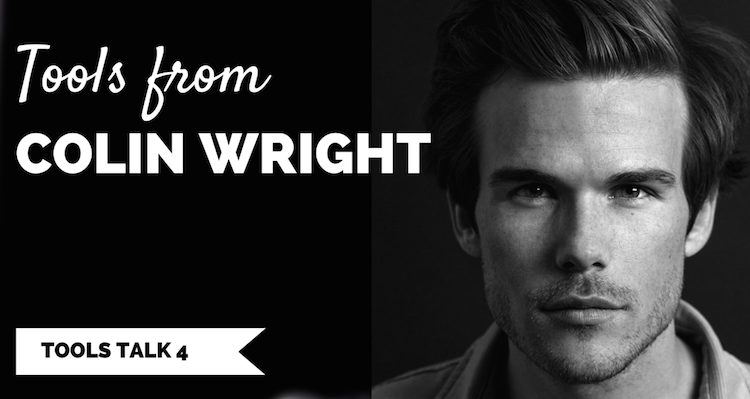
TT 004: Colin Wright on Writing, Traveling and Being Productive
“Focus, and in order to do that you have to know first what you want, so that you can focus on the right things”.
[ Tweet this ]
In this episode I talk with Colin Wright. Colin is an author, blogger, entrepreneur and traveler. His three words are optimism, relativism and perspectives. He shares everything he learns while traveling the world, meet different cultures and people.
He pushes his knowledge out to a wide audience with his books. I’ve read two of his books called Considerations and Act Accordingly. I really recommend you read those to get new and fresh views on life.
In this 38-minute episode Colin and I discuss:
• what his main goal is and how he implements goals, systems and habits
• how he defines success
• what he does to get out of a funk
• the tools he uses to exercise and meditate
• how he stays in touch with family and friends while travelling
• how creativity works for him
• the tools he uses to be more productive and write
• his advice on finding your passion and reducing stress
• his advice to live healthy and simple
• his essential stuff, books, apps and music
// Listen with iTunes
// Download
“Try to eat well 80% of the time and then do whatever the hell the rest of the 20%”.
[ Tweet this ]
Considerations
Act Accordingly
99% Invisible
Song Exploder
Hardcore History
How we got to now by Steven Johnson
Existence by David Brin
The Innovators by Walter Isaacson
Laura Marling - Once I Was an Eagle
Joni Mitchell - Blue
Childish Gambino - Camp
Subscribe here for Tools Talk updates!
Lieve Luisteraar,
Vandaag ga ik praten met Colin Wright. Colin is schrijver, blogger, ondernemer en reiziger. Zijn drie woorden zijn optimisme, relativisme en perspectieven. Hij deelt alles wat hij leert als
hij de wereld over reist, en kennismaakt met verschillende culturen en mensen. Hij brengt zijn ervaringen over op een groot publiek met zijn boeken. Ik heb er twee van gelezen, Considerations en Act Accordingly.
Ik kan ze jou echt aanbevelen om een nieuwe, frisse kijk op het leven te krijgen. Laten we in het interview duiken.
Jelle: Colin, bedankt voor je tijd en welkom in Tools Talk.
Colin: Bedankt voor je uitnodiging.
Jelle: Persoonlijk kwam ik met jou in aanraking nadat ik op internet zocht naar minimalisme en omdat ik The Minimalists had gelezen; ik las ook het boek Considerations, dat jij onlangs hebt uitgebracht. Ik vond het fantastisch en heb er een hoop inspiratie uit gehaald en ook daarvoor wil ik je bedanken.
En dan wil ik nu met het interview beginnen. Kun je me nog steeds horen? Ok, bedankt.
Mijn eerste vraag is: wat zeg je als iemand vraagt wat je doet?
Colin: Oh, dat hangt eigenlijk van de persoon af met wie ik te maken heb, maar over het algemeen is het iets van dat ik schrijver/ondernemer en full-time reiziger ben, dat ik zo ongeveer iedere vier maanden verhuis naar een ander land, afhankelijk van waar mijn lezers, mijn lezers, voor kiezen, dat ik leef van de inkomsten van mijn boeken en dat ik mede-oprichter ben van een uitgeverij met de naam Asymmetrical Press.
Jelle: O.K. Bedankt. (lacht) Dat is nogal wat! Ik vind je echt goed als schrijver en je hebt ook een uitgeverij samen met Joshua en Ryan, The Minimalists, nietwaar?
Colin: Ja.
Jelle: Een quote uit je boek die me echt bijbleef was, met andere woorden:
Je kunt een project beginnen, maar als je voelt dat dit iets is waar je de finish niet van wil halen dan kun je er beter mee stoppen. Er zitten namelijk ook projecten tussen die ik heb gestart en die altijd weer energie geven en altijd goed voelen, zoals mijn blog en het schrijven van dit boek bijvoorbeeld. Start iets om te weten of het werkt en voel je niet schuldig als je er mee wil stoppen. Het is goed en gezond.
Wat is jouw doel op het moment en gebruik je daar tools voor?
Colin: Ja, zo ongeveer. Ik heb niet zoveel vaste gewoonten als vroeger. Ik zie het nu wat breder, waarmee ik veel meer hoop te bereiken. Maar de manier om er te komen verloopt voor mij heel flexibel door mijn manier van leven en al het reizen. Mijn hoofddoel is om te groeien en me verder te ontwikkelen als mens en me steeds gelukkiger en gezonder te voelen en in staat te zijn het werk te doen waarvan ik geniet, omringd door mensen die ik graag mag en die me inspireren.
En steeds meer te kunnen leren en nieuwe informatie in me op te nemen, nieuwe ervaringen op te doen en de wereld te zien vanuit verschillende perspectieven. Dus het is nogal breed. Maar al die dingen, die ambities, passen tamelijk goed bij elkaar en om op dat punt te komen:
Het was in feite een kwestie van het werk te vinden waar ik van hou – en ik hou van schrijven, of het nou fictie, non-fictie of wat dan ook is – en werken met mensen waar ik om geef en die ik werkelijk respecteer, zoals Joshua en Ryan en de schrijvers waarvan wij werk publiceren. Het komt er allemaal op neer om dat allemaal in het werk te stellen.
Er moest hier en daar wat in het systeem op z’n plek worden gezet om het te laten werken, zodat ik, bijvoorbeeld, niet overdonderd wordt door de hoeveelheid e-mail die ik elke dag krijg. Of door de procedure van het bijhouden van een boekhouding, want toen ik daar 5 jaar geleden mee begon duurde dat voor mij een ééuwigheid. Maar nu kan ik me concentreren op het schrijven en het publicatieproces duurt ook niet meer zo lang.
Dus in de loop der tijd heb ik veel van dat soort dingen geleerd, zelfs al zijn het dan niet allemaal de meest interessante, belangrijkste dingen of beginselen volgens de 80/20 methode. Je leert er veel van en ontwikkelt op den duur methodes op basis van ervaringen.
Jelle: Ok, het komt in feite neer op het vereenvoudigen van procedures, waaraan je geen tijd wilde besteden, of …
Colin: ..inderdaad.. En in feite bepalen van welke onderdelen ik hou; ik hou echt van schrijven, zelfs van het uitgeven van boeken, het ontwerpen van een omslag, de formats maken en zo. Ja, daar hou ik echt van.
Maar ik hou bijvoorbeeld niet van marketing. Ik verveel me meestal erg daarmee, dus probeer ik wegen te vinden om toch boeken te verkopen en mensen erop attent te maken zonder ze lastig te vallen en zo in staat te zijn mijn werk te verkopen. En te kijken hoe ik er inkomsten uit kan genereren op een manier die ik ethisch verantwoord vind. Een manier die ik niet slecht vind om te doen, want ik haat het om te verkopering te doen of pop-up’s te gebruiken.
Dus probeer ik een manier te vinden waarop ik bijvoorbeeld niets hoef te doen waaraan ik me erger. Het is nogal een groot deel van het proces en helaas kun je er geen systeem in brengen of het delen, want het is voor iedereen anders. Maar als je in je werk investeert en oplet wat werkt en wat niet, dan kan het niet anders dan dat je er beter in wordt en ook efficiënter en sneller.
Jelle: Hoe zou je succes definiëren?
Colin: Oh, voor mij is dat ‘gelukkig zijn’ (lacht), elke dag zo mogelijk meer, en het werk te doen dat ik uitdagend en bevredigend vind. En me omringen met goede mensen. Dus, ja, er is een heleboel niet goed, maar voor mij is dit wat belangrijk is. Want als ik geen succes heb en ik doe het niet op die manier, dan kan ik het absoluut merken en dat betekent dat het tekens van slijtage gaat vertonen en bijgesteld moet worden, en dan focus ik me op de dingen waarvan ik weet die nodig zijn om me gelukkig te maken en die me helpen om te groeien. En in veel gevallen is er zo nu en dan iets wat ik fundamenteel verander en dan test ik zoiets en kijk of dat me werkelijk vaker gelukkiger maakt en dan gooi ik het roer helemaal om.
Jelle: Dus het schrijven is echt iets dat jou gelukkig maakt?
Colin: Ooh, ja.
Jelle: En reizen en de vrijheid die dat brengt ook, denk ik?
Colin: O, my God, Ja!
Jelle: Die dingen bij elkaar. Ok, wanneer je je niet gelukkig voelt en echt in de put zit, wat doe je dan om daar weer uit te komen?
Colin: Weet je, dat komt niet super vaak voor. Maar als het zo is, dan vind ik het moeilijk om te bepalen waar dat gevoel vandaan komt. Want als je je down voelt denk je niet rationeel van: ‘oh, misschien is er een reden voor, misschien moet ik mijn bloedsuiker op peil brengen en moet ik nodig wat eten of zo”.
Je denkt: Man, wat een rotdag vandaag en dan zak je meteen de put in. Maar als ik me zo voel dan pak ik mezelf aan; ik doe een stapje terug en zeg: Maar wow, ik krijg het leven, ik krijg de dingen om te doen, ik krijg alle fantastische mensen en verschillende plaatsen om mij heen.
Ik heb zulke geweldige kansen gekregen en vele daarvan zijn me gewoon aangereikt. Maar daarbij komt ook nog, dat als ik werk ik daar zoveel voldoening uit haal. En de combinatie van die dingen, vooral als ik ophoud toe te geven aan zo’n nare stemming, zorgt er altijd voor dat ik weer lach. Dat haalt me weer uit de put. En dan denk ik, wat ben ik toch aan het doen, wat heeft me zo down gemaakt. Laat me wat eten om mijn bloedsuiker weer op peil te krijgen; iets in die geest eigenlijk.
Jelle: Ok, dus dankbaar zijn voor het leven en de mensen om je heen?
Colin: Ja. Dat is het voor mij maar ik denk dat iedereen wel iets in zijn leven heeft meegemaakt en dat, als je er niet aan toegeeft en bijvoorbeeld zegt: Nou ja, er is altijd wel wat…, dan kun je er het beste maar om lachen. Dus steek dat maar in je zak als tool om te gebruiken als je het nodig hebt en dan is het veel makkelijker om afstand te nemen van die enigszins deprimerende momenten.
Jelle: Ja. En ik ben blij dat je het woord ‘tool’ gebruikte (lacht). Gebruik je ook tools voor het sporten?
Colin: Meestal niet. Ik bedoel, het hangt ervan af waar ik naar toe ga. Maar het heeft niet veel zin om work-out materiaal mee te nemen. Of wat dan ook van land naar land mee te nemen. Het is meestal zwaar en ik weet nooit wat ik tegen kom. Of qua lifestyle, dat ik ergens ben waar ik veel wandel, dan heb ik niet echt work-out materiaal nodig. Dus ik gebruik zo’n soort routine bij dingen die ik doe. Dat heeft alles te maken met het behouden van een bepaald lichaamsgewicht, dus veel push-ups en crunches en squats, oefeningen die ik overal kan doen, waar ik ook naartoe verhuis en zonder zulk zwaar materiaal mee te hoeven slepen.
Jelle: Ok, dus geen technische apps of iets waarmee je oefeningen kunt meten?
Colin: Nee, zoiets vind ik nogal …eh, dat staat me eigenlijk tegen. Voor sommige mensen werkt het wel echt, maar als ik zelf mijn eigen oefeningen niet doe, word ik tamelijk lui. Dan voel ik me niet zo goed als anders, dus doe ik die oefeningen altijd.
Elke dag iets en meestal nou net als ik aan het schrijven ben of bezig ben met een bepaald karwei dat weinig voorstelt maar langer duurt. Dan las ik elk half uur een pauze in.
Dan sta ik op van mijn stoel en doe een paar push-ups. Dus ik doe elke 30 minuten een bepaalde oefening en dat de hele dag door. Maar wel door alles op tijd te doen, net zoals met een alarm of zoiets.
Het is wel vijf jaar geleden dat ik mijn alarm regelmatig moest instellen, dus ik schrik me rot van zo’n ding als ik hem nu zou moeten gebruiken. En mijn telefoon gaat ook nooit over, omdat men zelden mijn telefoonnummer heeft. Dus als mijn telefoon begint te rinkelen en me zou waarschuwen dat ik mijn oefeningen moet gaan doen, dan zou ik een heel slechte associatie met working-out krijgen, terwijl ik veel te goed weet hoe prima ik me voel als ik er zelf aan begin. Dus zoiets pas ik alleen toe als het zin heeft, als ik voel dat ik al een poos niet opgestaan ben.
Jelle: Dus je telefoon gaat niet vaak. Maar hoe blijf je dan in contact met je vrienden en je familie?
Colin: Tegenwoordig meestal online. Mijn telefoon heb ik hoofdzakelijk met het oog op vrienden die ik in een bepaald land waar ik toevallig ben, heb gemaakt en ik vervang de telefoonkaarten elke keer als ik verhuis, dus dan heb ik iedere keer een ander telefoon-nummer. Als ik elke keer terugkom in de US zijn mensen dus verrast en weten eerst niet wie ik ben, omdat ik wel hun nummer heb, maar zij mijn nummer niet.
Er zijn maar heel weinig mensen die mijn nummer hebben en meestal e-mailen we alleen maar. Dat is ook niet zo afhankelijk van een bepaalde tijd; daar hou ik wel van. Omdat niemand van ons inbreuk doet op de agenda van de ander. Maar ik gebruik WhatsApp voor mensen in verschillende landen en ik gebruik Skype hoofdzakelijk om met mensen overzee, zoals met mijn familie, te praten. Maar verder is het meestal alleen e-mailen. Ik gebruik geen Instagram of iets dergelijk als ik aan het schrijven ben.
Jelle: Dat is zo, ja. gebruik je, naast sporten tools om te mediteren?
Colin: Nee, dat zou ik wel doen als ik vandaag pas zou beginnen, maar ik heb dat al zolang gedaan. Dus nu neem ik 20 minuten per dag en ga dan rustig zitten en doe niets. Ik denk als ik een dutje doe. Dan zou je kunnen zeggen: ik zet mijn timer op 20 minuten. Maar dat hoeft niet eens. Het kan ook als je bij de magnetron staat, of bij de oven, of waar dan ook. Het doet er werkelijk niet toe, zo lang je het maar even kan doen. Gewoon uitzoomen gedurende 20 minuten.
Jelle: Mediteren is dus een gewoonte voor je geworden?
Colin: Ja, het heeft wel jaren geduurd. Ik mediteer nu zo’n zes of zeven jaar. Uiteindelijk hoeft niets je eraan te herinneren. Dan gaat het vanzelf. Het enige dat nodig is, is iets dat je zegt of laat voelen dat je lang genoeg met je werk bezig bent geweest. Zo nodig kun je dan een klok of een horloge gebruiken. Je kunt zelfs in gedachten aftellen; maar eigenlijk is het beter dat je zelfs dát niet hoeft te doen.
Jelle: Ok, wat zou jouw 30 seconden pitch voor mediteren zijn voor mensen die dat nog nooit hebben gedaan?
Colin: Dan hoop ik dat het hun geest vrijmaakt en dat gaat niet meteen. Het zal niet al je problemen oplossen en het zal ook geen goeroe of yogi of zoiets van je maken. Maar wat het voor mij doet is dat het me helpt me te ontspannen. En het helpt me troep op te ruimen in mijn hoofd. Dus ik doe het elke dag met plezier, zodat ik me daarna op dingen kan richten die belangrijk zijn en op datgene wat ik anders vergeten zou.
Jelle: Troep opruimen – clearing clutter, dat klinkt goed.
Colin: Ja, en je mist het echt als je eraan gewend bent.
Jelle: Ja, en als je het over creativiteit hebt: hoe werkt dat bij jou?
Colin: Voor mij is dat gebaseerd op een heleboel ideeën / ingevingen, veel inspiratie uit mijn omgeving halen en daarom doet dat reizen me zoveel goed. Omdat ik voortdurend nieuwe dingen, nieuwe mensen, nieuwe geluiden, geuren, smaken, muziek enzovoort om me heen heb. Net als met boeken. Ik lees veel, vele uren per dag op z’n minst, gewoon om meer over alles te leren en meer perspectieven te ontdekken en meer stemmen te horen, vanuit die geschreven woorden.
En hoe meer ik dat doe, hoe vaker ik een soort van gelukzalige, toevallige, verbinding lijk te voelen en hoe meer ideeën ik krijg. Ik heb nooit geworsteld met het vinden van ideeën.
Ik heb nog nooit een writer’s blog gehad en ik heb ook nooit problemen gehad met creativiteit in de zin waarvoor dat woord staat. Dus, ik schrijf het volledig toe aan het steeds hebben van veel nieuws in mijn leven, een heleboel nieuwe dingen en constant nieuwe ervaringen.
Jelle: Wat zou voor jou het grootste obstakel zijn: niet mediteren, niet lezen of niet schrijven
Colin: Je bedoelt wat me daarvan af zou houden?
Jelle: Ja.
Colin: Over het algemeen zijn er voor mij niet zoveel obstakels, maar als die er ooit zouden zijn, dan zou het zijn vanwege het een of andere grote project zoals een boeken-tour of zoiets, waarbij ik verschillende maanden onderweg moet zijn en dag voor dag moet leven. Elke dag een nieuwe stad aan moet doen en een aantal dingen voor de pers, interviews moet geven en ’s avonds een lezing.
Daar word je echt doodmoe van, iedere keer weer en dan de hele tijd alert blijven en heel fit zijn en dan met mensen moet praten of zoiets dergelijks. Dat put je zo uit. En als ik me niet lekker voel, dan moet ik mezelf echt dwingen en mezelf erop wijzen om die dingen toch te doen. Dus daar tijd voor vrijmaken. Want anders schijnt er later helemaal geen tijd meer voor te zijn.. Maar als ik het dan toch doorzet, dan wordt alles beter. Ik slaap beter, ik voel me minder vermoeid en gezonder, dus het is het wel waard.
Maar dat is eigenlijk het enige waarmee ik wel eens moeite heb.
Jelle: o.k. Dan al die dingen van tegenwoordig die afleiden. Hoe vermijd jij die?
Colin: Meestal is het niet zo zeer een kwestie van ze vermijden; het is meer prioriteiten stellen. Bovendien is er voor afleiding in het leven ook wel wat te zeggen, denk ik. Veel mensen zeggen dat social media en lezen op internet niet goed is voor de productiviteit, maar ik hou er wel van. Ik vind het ongelooflijk handig. Ik krijg de beste kennis, informatie en connecties door Twitter en enkel maar lezen op internet bijvoorbeeld.
Dus voor mij is dat de afleiding die ikzelf heb gekozen.
Ik focus me erop en ik gebruik het op een specifieke manier en ik volg alleen maar mensen die dingen posten die me iets leren weet je, of die aardig voor me zijn of wat dan ook.
Dus wel dat soort dingen, als je je er maar heel selectief voor open stelt, tenminste zo werkt het voor mij.
Wat ik al zei, ik gebruik geen Instagram, ik laat Skype, Facebook Messenger of iets dergelijk niet de hele dag aanstaan. Ik beantwoord geen berichten en brandbrieven totdat ik er een heel stel tegelijkertijd kan beantwoorden. Ik verwerk dan hele stapels. Maar je moet uitkijken wat je aan afleiding toelaat in je leven. Maar dat je wél echt alles haalt uit de afleiding die je zelf hebt uitgezocht.
Jelle: Dus prioriteiten stellen is ook een belangrijke term voor je?
Colin: Ja, absoluut.
Jelle: Gebruik je tools om productiever te worden of beter te leven?
Colin: Ja, op het gebied van produceren gebruik ik Hootsuite voor alle social media dingen.
Dus op die manier, terwijl ik de hele dag lees, elke dag (lacht), kan ik dingen posten. In één keer, maar ook in segmenten die meer behapbaar zijn. Ik gebruik daarvoor mijn telefoon die ook een camera (lacht) heeft, dat is wel leuk.
Maar verder gebruik ik eigenlijk niets speciaals. Ik heb Gmail om alles zo’n beetje te labellen. Ik heb InBox, InBox Zero heet dat, meen ik.
Ik maak mijn InBox wel leeg, behalve voor dingen die ik moet doen en dan gebruik ik die als mijn To-Do lijst. Maar verder eigenlijk niets bijzonders. Ik bedoel, alleen normale apps en dat soort dingen, Adobe voor mijn werk en de social media dingen om in contact te blijven met mensen.
Oh ja, Scrivener gebruik ik voor het schrijven. Het bespaart me gigantisch veel tijd en het is werkelijk heel handig om boeken te schrijven. Dat is vermoedelijk een van mijn favoriete software programma’s op het moment.
Jelle: O.K.
Colin: Soms gebruik ik Evernote voor blogs, maar verder feitelijk niets bijzonders. Ik heb er eigenlijk helemaal geen slimme trucjes voor. Je kiest gewoon je software uit en dan zoek je uit hoe het werkt en zorgt ervoor dat het dat ook echt doet voor jou. Niet teveel gebruiken, maar ook niet te weinig en net als met alles ongelooflijk selectief zijn en zorgen dat het voor jou goed werkt.
Jelle: Dank je. Ik wil je nu een paar korte vragen stellen. Een soort samenvatting. Wat zou je in korte lijnen zeggen tegen iemand, die op zoek is naar een passie en die maar niet kan vinden?
Colin: Ga ervoor. Doe meer. Ga vanalles proberen. Duik de bibliotheek in en pak zomaar een boek, ga naar een sociale bijeenkomst of bezoek een stel mensen die je niet kent, Luister naar muziek waar je nooit eerder naar hebt geluisterd. Stel je open voor een heleboel nieuwe dingen.
Want dat is de enige manier om nieuwe, andere prikkels te krijgen, buiten die je al kent en als je daar je passie niet in hebt kunnen vinden. Je moet jezelf heel bewust uit je comfort zone trekken.
Jelle: Wat zou je zeggen tegen iemand die zijn relatie met anderen wil verbeteren?
Colin: Communiceer, wees duidelijk en durf het aan.
Maak het een punt van discussie, zelfs als het ongemakkelijk aanvoelt of lomp of wat dan ook. Maak het duidelijk. Wat voor soort relatie het ook is, iedereen maakt hetzelfde een keer door en weet precies wat er aan de hand is. En op die manier kunnen jullie dan betere beslissingen nemen.
Jelle: Wat voor een korte richtlijn heb je voor iemand die het heel druk heeft en een heleboel stress voelt ?
Colin: Doe meer aan je work-out, eet beter en neem je lijst met verplichtingen eens door.
Werk eraan en zoek uit wat belangrijk is voor jou en wat niet. En verander daarna dingen.
Jelle: Een korte richtlijn voor een jong persoon die vraagt: wat moet ik doen met mijn
leven, Colin?
(ze lachen allebei)
Colin: Ik zou hetzelfde zeggen als tegen de persoon die geen passie voelt voor iets.
Laat los, stel jezelf open voor een heleboel dingen en probeer veel uit. Experimenteer.
Dat is de enige manier om erachter te komen wat goed voor jou is. Want wat goed is voor mij
is niet goed voor iedereen.
Sommigen zouden mijn leven maar saai vinden of zouden er een hekel aan hebben, omdat het veel te veel stress met zich meebrengt.
Jelle: Ja, al die verschillende landen ….. zo “saai”…
Colin: Ja, precies. Maar ikzelf zou het ook niet aanbevelen aan mensen die daar een hekel aan hebben. Ze zouden haten wat ik doe. En ik zou ook niet gelukkig zijn met hun manier van leven. Dus er is geen goede en slechte manier. Je eigen leven leiden wil alleen maar zeggen dat je in contact moet blijven met jezelf en uit moet vinden wat jou gelukkig maakt. Wat jou motiveert en wat jou in vuur en vlam zet. En zoek daarover meer uit.
Jelle: Wat is jouw beste advies om gezond te leven?
Colin: Val niet voor rages. Er is heel veel dat trendy of populair is op het gebied van diëten en work-outs enzo, en bijna zeker komt er binnen een jaar of zelfs korter weer een andere trend om de hoek kijken.
Het beste advies is: probeer 80% van de tijd verstandig te eten en voor de resterende 20% maakt het niet uit. Op die manier voel je je niet zo in een wurggreep zitten door je dieet en je mist ook niets van die zalige, hoewel ongezonde dingen in het leven.
Maar doe zo regelmatig mogelijk aan work-outs. Pas het in je lifestyle in, maar overdrijf niet. Probeer niet aan bodybuilding te doen als je geen bodybuilder wilt worden. Maar kies oefeningen die je de hele dag door kunt doen en probeer tenminste elke dag een beetje te doen. Het voegt echt iets toe en het is gezond voor je. Het maakt dan wel geen atleet van je, maar je zult je gezond voelen en dat is iets dat je misschien aanzet tot meer.
Jelle: Zoek de oefeningen die bij jouw manier van leven passen?
Colin: Ja, bij jouw manier van leven. Iets dat duurzaam werkt, dat je kunt blijven doen en dat je niet kapot maakt.
Jelle: Wat is je beste advies om eenvoudig te leven?
Colin: Wees gefocust. Focus, focus, focus. En daarvoor moet je eerst uitzoeken wat je wilt, zodat je je op de juiste dingen kunt richten. Dus echt, leer jezelf kennen. Wat maakt je gelukkig, wat motiveert je, wat voor soort werk wil je doen. Ook ethisch gezien wat je wilt gaan doen en gebruik die richtlijn voor alle andere dingen die je wil en focus je daarop.
Jelle: Ja. Ik heb een cursus samengesteld voor mijn lezers/luisteraars. Het vereenvoudigen van je leven in 4 weken. De eerste week zoek je uit wat je eigenlijk wilt. En naderhand richt je je op alles wat je wilt vereenvoudigen en wat niet meer werkt voor datgene wat je wilt.
Colin: Goed zeg. Ja, dat is een goed begin!
Jelle: Ja. Ik raak echt geïnspireerd door jouw manier van reizen en het zien van allerlei steden. Ik ben in Brazilië geweest in 2011. Dat is tevens de plek geweest waar ik het boek Think and Grow Rich van Napoleon Hill heb gelezen, wat me echt in vuur en vlam zette
op het vlak van persoonlijke ontwikkeling. En ik ben een heleboel blogs gaan lezen en zodoende kwam ik jouw blog tegen. Dus, voor mij was het echt het reizen in combinatie met dat boek wat mijn leven heeft veranderd en ook mijn manier van denken. En als ik je nu hoor dan denk ik: ja, ik wil alleen maar reizen en al die nieuwe mensen ontmoeten. Maar ik heb ook echt een sterk gevoel me te willen vestigen en bij mijn lief te zijn en in Nederland.
Hoe zou jij omgaan met gevoelens zoals die van mij?
Colin: Nou, ik denk dat die dingen echt wel samen kunnen gaan en geen tegenpolen zijn. Ik denk dat er genoeg manieren zijn om te reizen en nieuwe ervaringen op te doen. Vaak houden mensen er echt niet van te reizen omdat ze zo graag in een vliegtuig zitten, maar juist omdat ze graag nieuwe plaatsen zien en nieuwe dingen willen ondervinden. En omdat ze op een onbekende plek willen zijn en andere onbekende mensen en culturen willen leren kennen. Er zijn best manieren waarop dat kan. Weet je, je kunt kortere reizen maken; je kunt met mensen samen reizen met wie je dat graag wilt…
Jelle: Ja, samen reizen.
Colin: Ja, en je kunt reizen dichtbij huis. Het is geweldig dat mensen de hele wereld willen
zien, maar ze kennen vaak niet eens hun eigen stad, staat, land of wat dan ook.
Ze kennen nog niet eens de postcode van hun achterburen (tja, Jelle, dat heb ik er maar van gemaakt). Er valt altijd genoeg te ontdekken om je heen. En ook in contact proberen te komen met andere mensen, ander voedsel te leren kennen, zelfs binnen je eigen stad. Er zijn zoveel mensen die zulke interessante dingen doen. Daar profiteer ik op reis net zo goed van, gewoon contact maken en uitvinden. Daarom vind ik Twitter en Instagram fijn. Die dingen hebben veel waarde. Want je kunt om je heen kijken en zien wie er in je buurt interessante dingen aan het doen zijn en zo contact krijgen. Bijvoorbeeld, ze hebben foto’s gemaakt van een bepaald soort voedsel. Het restaurant ziet er geweldig uit. Die persoon schijnt een goede smaak te hebben voor zoiets.
Misschien wordt dat dan de volgende stap die ik ga nemen. Want misschien kunnen we elkaar ontmoeten en kunnen ze me iets aanbevelen. Dat zijn dingen die ik aldoor doe en zo ook de mensen die ik in Seattle heb ontmoet.Nog maar kortgeleden gebeurde er iets dergelijks, toen ik toevallig iets online zag dat zij gepost hadden en dat ik zei: Oh, maar dat is gaaf. Kun je me iets aanbevelen? En nu gaan we met elkaar om en ik heb dingen van hen geleerd en zij van mij. Zoiets kun je overal doen, dus dat is wat ik gewoonlijk adviseer, want maar weinig mensen schijnen het zo te doen. Net alsof we naar ons eigen huis kijken en zeggen: ik heb hier niets meer te zoeken, er is hier niets meer aan.
Terwijl we in werkelijkheid nog maar het topje van de ijsberg eraf hebben geschraapt.
Jelle: Mooi. O.K. Het laatste van de Tools Talk zijn de 3 essentiële dingen.
Jouw 3 essentiële dingen op je lijst.
Colin: Bedoel je echt dingen of apps of zo…
Jelle: Ja, materiële dingen.
Colin: Materiële dingen. O.K. Nou, mijn laptop is geweldig. Daarmee kan ik vanalles doen…
Jelle: Ja, ik ook..
Colin: Dus heb ik ik zo’n 13″ Macbook Pro. Weet je dat ik heel vaak vertrokken ben zonder telefoon. Maar ik reis steeds meer
over de weg en het is echt fijn als je dan de een of andere smartphone bij je hebt waarvan je de simkaart kunt verwisselen , zodat ik social media kan gebruiken en met mensen in contact kan komen, dus dat zou ik ook noemen.
En .. och.. ik bedoel..ik zou waarschijnlijk pennen noemen. Het is nogal gek om voor het eerst ergens te komen opdagen zonder pen. Als dat echter niet meetelt, dan zou ik waarschijnlijk zeggen: een klein opschrijfboekje met een pen, zodat ik wat notities kan maken.
Ik schrijf het dan meestal niet voluit op met pen en papier. Maar ik hou er wel van notities te maken om dan later problemen uit te werken in de boeken die ik schrijf en zoiets dan uitgebreid te beschrijven. En er eerst vast iets bij te schetsen om me een beetje te helpen. Dus zoiets is ook wel handig.
Jelle: Wat heb je nu verder nodig? (hij lacht) kleren of zo, of eten?
Colin: Ja, wat kleren. Ik wil ook altijd graag mijn paspoort bij me hebben en kleine dingen om bij de hand te hebben, maar verder heb ik niet zoveel nodig. De meeste dingen die ik niet heb, kan ik wel ergens krijgen of lenen of huren of wat dan ook. Dus qua bezittingen, in de zin van ‘nodig hebben’, dat zijn er maar weinig. En de rest is allemaal gewoon leuk om te hebben.
Jelle: Gratis apps?
Colin: Zoals ik al zei is Scrivener geweldig met het oog op het publiceren van boeken. Photoshop is dan vermoedelijk de andere app die ik het vaakst gebruik.
Jelle: Ontwerp je zelf? Je eigen covers ook?
Colin: Ja. Ik werkte eerst in de design en illustratie wereld, dus ik maak het meeste eerst zelf en dan breng ik het in op de computer en pas het aan.
Jelle: Mooi.
Colin: En weet je, kortgeleden … het klinkt misschien vreemd omdat ik twee apps heb die ik gebruik om ergens naar te luisteren. Ik gebruik Spotify voor muziek en nou ben ik sinds kort
iTunes gaan gebruiken voor podcasts. Misschien is daarvoor een betere app, maar omdat ik daarmee pas kom kijken heb ik iTunes gedownload and ik heb als een gek podcasts zitten luisteren. Dus dat is handig voor me om nu te hebben.
Jelle: Wat zijn op het ogenblik jouw drie belangrijkste podcasts?
Colin: Oh, o.k., eentje trok me aan om als podcast te beluisteren en die heet 99% invisible
en is heel mooi; meer over architectuur en design.
Ik hou ook echt van Songs Quota Dat is volgens mij een kleinere, maar hij is erg goed. Ze knippen als het ware muziek in stukjes en laten zien hoe je die liedjes kunt opbouwen. En (..zucht…) er zijn er veel meer waar ik echt van hou.
Maar op het moment voordat ik in dit interview kwam, was ik aan het luisteren naar Dan Collin’s Hardcore History, die die ongelooflijk lange broadcast episodes van zo’n 4 of 5 uur maakt over een belangrijk onderwerp. Dus lijken ze wel op een luisterboek met het een of andere historische onderwerp.
Iets wat hij echt helemaal uitdiept en dat alles met een uitstekend team op de achtergrond.
Hij maakt zich er niet makkelijk vanaf.
Jelle: O.K. Mooi. Daar was ik tamelijk nieuwsgierig naar.
Drie boeken. Wat zijn de belangrijkste voor jou?
Colin: Oh, eens kijken. Ik heb er net een uit die heet: How We Got to Now
die echt heel, heel goed was. Non-fictie in de zin van technologieën en sociale bewegingen,
conceptueel opgezet, om ons naar de moderne tijd te leiden. Ik heb er nog een gelezen, en die wil ik mensen aanbevelen..eh.. ik zoek hem even op om de juiste titel te geven - Existence
van David Brin. Dat is een van mijn favoriete science fiction schrijvers en hij schreef dus dit boek.
Echt een interessante kijk op het idee van buitenaardse wezens die op aarde komen. Hoe dat er eigenlijk aan toe zou gaan in het echte leven, veronderstel ik, voor kleine groene mannetjes in ruimteschepen. In feite is er één boek waar ik verschillende keren haast van uit mijn dak ging. En dat ervoor zorgde dat ik dacht toen het bijna afgelopen was, dat ik wel wist hoe het af zou lopen. Maar het waren eigenlijk drie epilogen en elke daarvan zette je net zo op het andere been als de volgende, en dat was geweldig.
En dan heb ik nog een boek gelezen dat The innovators heet van Walter Isaacson , die man die de biografie van Steve Jobs heeft geschreven. Hij schreef een boek over de ontwikkeling en de uitvinding van internet; alle technologieën die daar naartoe hebben geleid. Dat was echt interessant. En dan nog een heleboel meer.
Jelle: Klinkt goed. Is één van die boeken er een die je het allereerst zou aanbevelen aan anderen?
Colin: Ik beveel ze alledrie aan. Jazeker. Dat wil zeggen, ik lees altijd boeken. Eentje per keer, maar ik broed als het ware meestal op …? .en dat is nogal dwangmatig. Dus ik kan op elk moment wel eens echt bezeten zijn van een boek dat ik net uit heb. Dus dit waren er drie van de vier die ik vermoedelijk het laatst gelezen heb.
Jelle: Is er een boek dat echt je manier van leven heeft veranderd, dat je manier van denken heeft veranderd?
Colin: Weet je, ik denk dat elk boek dat doet op de een of andere manier, in het ideale geval.
Als je een boek leest, of het nou non-fictie or fictie is, van beide leer je iets of begrijp je een bepaald moment in de geschiedenis, een bepaalde technologie of zoiets.
Of, zoals bij fictie, geeft het je misschien een nieuw perspectief, raak je begaan met iemand, laat je je eigen gedachten los en verplaats je je in iemand anders en zie je de wereld vanuit een ander perspectief, sta je in andermans schoenen. Dat bijvoorbeeld.
Dus, ideaal gezien, wat je ook leest, je leert er iets van. Ik merk het tenminste wel.
Jelle: Ja, ik vraag dit altijd omdat één boek mij zo enorm heeft veranderd. Dus ik ben altijd benieuwd of er voor jou ook een boek was dat jou veranderd heeft of je op een bepaald spoor heeft gezet.
Colin: Nee, niet een in het bijzonder. Maar over het algemeen veranderde het lezen me beslist wel.
Jelle: Je hebt veel boeken gelezen; ik heb je op GoodReads zien staan.
Colin: Oh, daar, Ja. Ik ben daar net mee begonnen. Dat zijn enkel de boeken die ik in de laatste zes maanden of zo heb gelezen, Ik ben altijd al een verschrikkelijke “hardcore” lezer geweest.
Ik was op de basisschool een teruggetrokken kind, ze moesten me dreigen met strafwerk als ik niet met andere kinderen wilde spelen. Ik wou alleen maar binnen zitten en lezen.
Jelle: O.K. (..lacht …) ga zo door, man!
Wat zijn je drie muziekalbums, de belangrijkste?
Colin: Oh, dat is een goeie vraag. Laat me even kijken op Spotify. Ik heb onlangs hoofdzakelijk geluisterd naar Laura Marling. Ze heeft een album uitgebracht dat heet Once I Was an Eagle, dat is fan-tas-tisch!
En Joni Mitchel, een van mijn oude favorieten. Ze heeft een album dat Blue heet, dat ook fantastisch is. Laat me even wat opzoeken (op zijn smartphone). Moeilijk kiezen. Het is moeilijk voor me omdat ik ze nooit helemaal uit luister.
Jelle: Ja. Of je moet je muziek wat eenvoudiger op te zoeken maken.
Colin: Ja. Ik hou nu eenmaal van …, Ik hou erg van Childish Gambino. Hij heeft veel goeie dingen uitgebracht, maar zijn tweede album is geweldig en ik hou ook van zijn korte album dat pas uitgekomen is. Maar ik hou helemaal veel van zijn eerste album Camp.
Jelle: Laten we die drie albums dan maar jouw belangrijkste noemen op dit moment.
Colin: Klinkt goed!
Jelle: Colin, we komen nu bijna aan het einde van ons veertig minuten-gesprek.
Ik wil je hartelijk bedanken voor je tijd en vertel de mensen in Nederland even waar ze je kunnen vinden als ze je boeken en artikelen willen lezen.
Colin: Ja goed. Mijn blog heet exilelifestyle.com en al mijn werk en andere projecten staan op colin.io.
En als je me op internet op wil zoeken, type dan mijn naam in, Colin Wright, op Google en dan duik ik meestal vanzelf op. En op Twitter en Instagram en zo is ‘Colin is mijn naam’ mijn gebruikersnaam.
Jelle: Iemand zei vandaag tegen me, toen ik vroeg wat ik aan jou, Colin, moest vragen:
“Vraag hem eens wat zijn naam is”. ..(ze lachen allebei). Dat was nou echt ‘waardevol’ voor het interview!
O.K. Nog eens heel hartelijk bedankt voor je tijd en ik hoop je gauw weer te spreken, Colin.
Colin: Nogmaals bedankt dat ik in je uitzending mocht zijn.
Dear Listener,
In this episode I talk with Colin Wright. Colin is an author, blogger, entrepreneur and traveler.
His three words are: optimism, relativism and perspectives.
He shares everything he learns while traveling the world, meeting different cultures and people. He pushes his knowledge out to a wide audience with his books. I’ve read two of them, called Considerations and Act Accordingly.
I really recommend you to read these books to get a new and fresh perspective on life.
Let’s dive into the interview.
Jelle: Colin, thank you for your time and welcome on Tools Talk, the broadcast.
Colin: Thanks for having me.
Jelle: My personal story with you is that I came across you while I was searching online for minimalism and reading The Minimalists. I also read the book that you recently published, Considerations. And I thought it was fantastic; I got a lot of inspiration out of it, so I also want to thank you for that.
I’d like to start the interview right now. Can you still hear me? O.K. thanks!
My first question is: what do you say if someone asks you what you do?
Colin: Oh, that really depends on the person where I’m at, but generally something along the lines that I’m an author, entrepreneur and full-time traveler. And that I move to another country every four months or so. Based on the votes of my readers, my blog readers and I make my living out of my books and I am the co-founder of a publishing company called Asymmetrical Press.
Jelle: O.K. thanks. (smiles..) .. that’s a lot.
I really like you as a writer and you have, like a public press with Joshua and Ryan, the Minimalists, right?
Colin: Yes.
Jelle: One quote from your book that really struck me was: Live your life and allow your goals and priorities to grow as you grow, otherwise you find yourself towards a finish line you have no interest in crossing for no better reason than you told yourself you would cross it someday.
What is your goal at this moment and do you use implements or tools to these goal systems or habits?
Colin: Yes, sort of. I don’t have as many habits as I used to. I have moved into kind of a broader scale type of things where there is a lot of things I hope to achieve. But the way in which I get there I’m very flexible with, because of the nature of my lifestyle and all the traveling and such.
But I do have a.., my main goal is to continue to grow and develop as a person and to every year be happier and healthier and able to do the work that I enjoy, surrounded by people that I like and people who inspire me. And being able to continue to learn and to take in new information, have new experiences and see the world from different perspectives. So it’s kind of broad. But they all fit pretty well, those ambitions.
And to get to that point: it is basically a matter of finding work that I love and I love writing, being able to write fiction, non-fiction and whatever comes to mind. And work with people that I care about and that I really respect like Josh(ua) and Ryan and the authors that we publish. It is essential to make that work.
There have been some systems put in place to make sure, for example, that I am not overwhelmed by the amount of email I get every day or overwhelmed by the process of publishing a bookkeeping. Because, when I started doing that, like five years ago, which took forever, and now I can focus on the writing and the process of publishing does not take very long at all.
So, over time I have developed a lot of those things, even if it’s not maybe the life high-key type of, you know, pomodore or principle or 80/20 or anything that necessarily it strips like that. There’s a whole lot of learning and over time developing processes based on that learning.
Jelle: O.K. It’s really simplifying the processes you did not want to spend time on or….
Colin: Yes, exactly. And identifying basically which parts I enjoy. I really enjoy the writing, even the publishing, designing the cover, formatting and things, I really enjoy that.
But I don’t like marketing, for example. I am so bored by that most of the time. So figuring out ways that I can market and still sell books and make people aware that without bugging them I’m able to sell my work and make a living in ways that I find to be ethically o.k.; a way that I don’t feel dushy for doing it. Because I hate it when I’m overselling people or use pop-ups. So figuring out a way that I can do that for example without doing the things that I feel I’d be bugging people with. And that is a huge part of the process and it’s something that,
unfortunately you can’t systematize then and share, because it’s different for everyone.
But putting in the work and keeping track of what works and what doesn’t work, over time you can’t help but getting better at it, you get more concise and faster with your process.
Jelle: O.K. Thanks a lot for that.
How would you define success?
Colin: Oh, for me it is being happy (..laughs), happier every day if possible and doing work that I find to be challenging and rewarding. And surrounding myself with good people.
So, again, there is a lot too bad, but for me it’s the type of thing that when I’m not successful and I’m not doing those things, that I can definitely feel it and it means that it signs to recalibrate. If I focus on the things that I know to make me happy and help me grow and looking into that every once in a while and say: is this still what you need to be doing? Is this still the type of work that makes you happy and the people that make you happy or the lifestyle that makes you happy?
In a lot of cases every once in a while there is something I’ll change on a fundamental level and I’ll try out and see if that does make me happier more frequently and then completely reshuffle everything as a result of that.
Jelle: So the writing is really something that makes you happy?
Colin: Oh, yeah!
Jelle: And I think traveling and the freedom it brings?
Colin: O my God, yes!
Jelle: Those things combined. O.K.
When you’re not happy and in a really big funk, what do you do to get out of that?
Colin: You know, it does not happen super often. But when it does I find the hard part is
identifying it, of course. Because, when you’re feeling down you don’t rationally think:
oh, maybe there’s a reason, maybe I have little blood sugar and I need to eat something or whatever. You think: Man, today sucks. And you kind of go into the funk immediately.
But when I have this state of mind I pull myself out of it. I basically step back and say : wow, I get to live this life, I get to do these things, I get to have these wonderful people, I get to go these different places! I have just such amazing opportunities and a lot of it was just handed to me. But then the other thing too, that when I work, I get even more out of that. The combination of those things, when I stop to acknowledge, then never fails to put a smile on my face and tends to pull me out of that mood. And then I can think: o.k., what am I doing, what’s actually putting me in this funk? Let’s go eat something to get that blood sugar back up. Something along those lines.
Jelle: O.K. So the gratefulness for life and the people that are around you?
Colin: Yes. And I think that everybody has something. That’s what it is for me, but I think that everybody has something in his life that, if they stop to acknowledge it, and say: now, here, there is something in my life … it will put a smile on their face.
Because everybody has something. So have that in your pocket as a tool to take out when you need it and then it is much easier to get away from those slightly depressed moments.
Jelle: Yes. Glad you used the word ‘tool’!
Do you use tools to excercise?
Colin: Not usually. I mean, it depends on where I am at. But it does not make a lot of sense to carry work-out equiment or anything to carry from country to country. It’s obviously heavy usually and I never know what I’m going to meet or lifestyle-wise. I am in a place where I’m walking a lot and I don’t necessarily need certain types of equipment. So I have kind of have a routine that I do. It’s all bodyweight resistance So a lot of push-ups and crunches and squats and …?.., like that. Things that I can do anywhere, no matter where I move without having to carry equipment, even ….? ..
Jelle: O.K. So no technical apps or something you use to track exercises?
Colin: No. I find that kind of .. eh, it depresses me actually. For some people it really, really works, but if I don’t work out, I feel kind of sluggish and I don’t feel as well as I usually feel, so I always work out. Every day I do something and usually particularly when I’m writing or involved in some type of work that involves a little bit longer duration. Then I’ll break it up every half hour. I’ll get up and do some push-ups, so I do some type of exercise every 30 minutes or so throughout the day. But trying to keep track of it like with an alarm regularly. So, alarms scare the hell out of me, if I’d set one. And my phone never rings, too, because people very seldom have my phone number. So, if my phone starts yelling at me and tells me to work out, I’d have a very bad association with working out. Whereas right now I know that it makes me feel good about myself. So, I kind of fit it in whenever it makes sense, whenever I feel that I haven’t stood up for a while.
Jelle: So your phone is not ringing a lot. But how do you keep in contact with your friends and your family?
Colin: Mostly online these days. My phone is primarily for friends that I have made in the country that I happen to be in at the time and I swap out some cards every time I move, so it is a different phone number every time. So, when I come back to the US every time, people are surprised and don’t know who I am at first. Because I have their number, but they don’t have mine. So there are very few people that have my number and usually we just text, so it’s not so time-sensitive, which I like. Because neither of us is forcing our schedule on the other person. But I use Whatsapp for people across countries., I use Skype primarily to talk to people overseas like family. But beyond that it’s mostly just email. I don’t really do instant messages or anything. If I have that turned on on my computer it is too distracting.
Jelle: Yes. Besides exercising, do you use tools to meditate?
Colin: No. I might if I was getting started today, but I’ve been doing that kind of thing for a very long time. So at this point I take 20 minutes a day and sit quietly and do nothing. I guess you could say I use a nap. I set a 20 minutes timer, but nothing more sophisticated that that. It could be on the microwave, it could be on the oven, it could be on my phone. It really does not matter as long as I can, kind of, just space out for 20 minutes.
Jelle: So meditating became a habit for you?
Colin: Yes. It took years. I’ve done the meditation thing fo about six or seven years now, so over that amount of time it’s kind of like the working out. Eventually you don’t need a reminder or anything too sophisticated. All you need is something that tells you’ve been doing it long enough. So if you require that, then you can use a clock or a watch. You can even just count down in your head or it is better if you don’t have to.
Jelle: O.K. What would be your 30 second pitch for meditating for people who never meditated?
Colin: It hopes to clear your mind usually and it won’t right away. It won’t solve all your problems and it won’t make you a guru or a yogi or anything, but what it does for me is that it helps me relax when I need to relax and it helps me clear clutter in my brain. So I like to do it once a day so I can get to what’s important and remember things that I might have forgotten.
Jelle: Clearing clutter.. That’s very nice.
Colin: Yes. It’s hard to go without it when you’re used to it.
Jelle: Yes. And when you talk about creativity. How does creativity work for you?
Colin: For me it’s based on having a lot of inputs, a lot of stimuli around me and this is why the travel thing works so well, because I’m constantly surrounded by new things, new people and new sounds, smells, tastes and music and everything. The same way that books are. I read a lot for several hours a day at least, just trying to learn more about more things and see more perspectives and hear more voices, like with written voices and things.
And the more that I have the more kind of happy, accidental connections I seem to have, the more ideas I have. I never really struggled to come up with ideas, I’ve never had writer’s blog and I never had any trouble being creative in the way that the word is usually used. So, I totally attribute that to having a lot of novelty in my life and a lot of new stuff all the time, new experiences and new things constantly.
Jelle: What would be your biggest obstacle, like not meditating, not reading or not writing.
Colin: The biggest obstacle in keeping me from those?
Jelle: Yes.
Colin: Generally I don’t have too many obstacles for that, but if I ever do, it’s because of some big project, like on a book tour or something, where it is several months on the road and, you know, doing day-to-day, a new city every day and have like a couple of press things, interviews and giving a talk at night. It really wears you down, you get very, very tired all the time and having to be ‘on’ all the time and very alive and speaking to people and such. It gets so exhausting and if you’re very unhealthy I really have to force myself to remember to do these things. So, to find time for them, because otherwise it seems that there is no time. But when I do, it makes everything better. I get better sleep and I feel less tired and I feel more healthy, so it’s definitely worth it.
These are probably the only times that I have any trouble fitting it in sometimes.
Jelle: O.K. All the distractions from the time we are living in now. How do you get rid of all these distractions?
Colin: It’s usually not so much a matter of getting rid of them; it’s prioritizing and there’s a lot of very good distractions I like in life. A lot of people will say, like social media and reading on internet and things like that are not good for productivity. But I love those things. I find them incredibly useful. I find a lot of my best knowledge and information and connections thru’ things like Twitter and just reading things on the web. So those are for me the “distractions” that I have chosen.
I focus on them and I use them in a very specific way and I only follow people who post things that, you know, help educate me or help me to be entertained or whatever. So, using things and exposing yourself to things very selectively, I think, is .. at least works for me. Like I said
I don’t keep instant message windows, I don’t keep Skype on all day. I don’t keep Facebook messenger or anything on all day. I don’t respond to messages and muster emergencies until I can respond to a bunch of them all at once.
I badge-process, I guess, in that way. But it’s being careful of what you bring into your life in terms of distractions and realy getting the most out of the distractions you do choose to have.
Jelle: So prioritizing for you is a big word.
Colin: Yes, absolutely.
Jelle: And do you use any tools to be more productive or live better?
Colin: Yes. Productive-wise I use Hootsuite for my social media thing. So that way, as I read, all day – every day -, I can post the things, put them on a queue and they’ll post over the course of the next couple of days or weeks. That way I’m not posting everything all at once, but in kind of segments that amount to a more digestible timeline. I use that, I mean, I have a phone, which I use for things like this, too, which has a camera (..laughs..), which is nice.
But beyond that nothing too specific. I use Gmail for kind of just label everything. I have an Inbox, Inbox Zero is what they’ve called it, I guess. I keep my Inbox empty except for things that I have to do and then I use that as my To-Do list. Nothing else too sophisticated though, really. I mean, just kind of the normal apps and things, Adobe stuff for work and the basic social media things for staying in touch with people.
O.k. yes, Scrivener I use for books, which saves a hell of a lot of time and creates really beautiful books and is one of probably my favourite pieces of software right now.
Jelle: O.K.
Colin: Evernote sometimes for blogs. But beyond that though nothing too spectacular. I don’t really have any like truly cool tricks with these things. It’s choosing your software and then figuring out how it fits and making sure that it fits. Not using too much, but not using too little and just like with everything else being incredibly selective and really making those work well for you..
Jelle: Thanks, Now I’d like to ask you some short questions. Bit of a round-up.
What would you say to someone in a short miniguide ??? who is searching for a passion and who cannot find it?
Colin: Go do more things. Go try a lot of things. Go into a library and pick up a random book, go to a community even to meet with a group of people that you’re not familiar with.
Listen to music that you haven’t listened to before. Just expose yourself to a lot of new things.
Because … iets weggevallen
Actually, make it a point to communicate, even when it’s uncomfortable or seems rude or whatever, make it clear. Whatever type of relationship it is, everyone is always on the same page and knows exactly what’s going on and that way you can all make better decisions.
Jelle: Your short guide for a busy person with a lot of stress?
Colin: Work out more. Improve your diet and go thru’your list of responsibilities. Work and figure out what’s important to you and what is not. Change things based on that.
Jelle: A short guide for a young person who asks: what to do with my life, Colin?
(both laugh..)
Colin: I would say to him the same as to the person of the passion. Let go, expose yourself to a lot of things and try a lot of things. Experimenting, you know.
That’s the only way you can know what’s good for you. Because, what’s good for me is not good for everybody.
Some people would live my life and be so bored. Would hate it because it is so stressful tot them.
Jelle: All those different countries… So “boring’..
Colin: Yes, exactly. I wouldn’t plan that to people who would hate that though. They would hate what I did. And I would not be happy with their lifestyle either. So there is no right of wrong way. To live your life is just that you have to be in touch with yourself and figure out what makes you happy and what drives you and what lights a fire under your ass and pursue a lot more of that.
Jelle: What is your best advice to live healthy?
Colin: Don’t fall for fads. There are a lot of things that are very trendy and popular all the time in terms of diets and work-outs and things, and almost invariably a new one will come along in a year or so or less than that.
The best advice is to eat well, 80 percent of the time, and then do whatever the hell the rest of the 20 percent. That way you don’t feel so strangled by your diet and you don’t miss out on some of the delightful unhealthy things in life. And then work out as regularly as you can. Fit it into your lifestyle, but don’t kill yourself with that. Don’t try to bodybuild if you don’t want to be a bodybuilder. But figure out some exercise you can do throughout the day and try to exercise at least a little each day and it really adds up and makes you healthy. It may not make you an athlete, but you’ll feel healthy and that will be the type of thing that encourages you to maybe find more work-out or sorts of diet things if you want to do that later.
Jelle: Finding the exercises that suit your lifestyle.
Colin: Yes, your lifestyle… Something that is sustainable, that you can keep doing and that doesn’t kill you.
Jelle: Your best advice to live simple?
Colin: Focus.
Focus, focus, focus. And in order to do that you have to know first what you want, so that you can focus on the right things. So, really get to know yourself, what makes you happy, what drives you, what type of work you want to do. Morally and ethically what you will and want to do and then use that to guide all of the other things that you want to do and focus on those things.
Jelle: Yes. I made a course for my audience. It’s called Minimalize in English. But then simplify your life in 4 weeks. The first week you’ll find out what you want. And then afterwards you will focus, and simplify all the things that don’t work for all that you want.
Jelle: Yes. I am really inspired by your way of traveling and seeing all kinds of cities. I’ve been in Brazil in 2011. It’s also the place where I read the book Think and Grow Rich by Napoleon Hill, that really brought a fire to my ass in terms of personal development and I started to read a lot of blogs and also came across your blog. So, it was really the traveling in combination with the book, that changed my life, changed my thinking also. And when I hear you right now I think: o.k. I just want to travel and meet all those new people. But I also have a really strong feeling to settle and to be with my love and to be in The Netherlands. So, how would you cope with those feelings I have?
Colin: Yes, I don’t think they are in opposition. I think that there are plenty of ways that you can travel and experience new things. In a lot of cases people don’t like to travel because they like to be an an airplane, but because thye like to go to new places and try new things. And being in an unfamiliar place and learn other unfamiliar people and cultures. There are ways you can do that. You know, you can travel shorter, you can travel with the people that you want to be with..
Jelle: Travel together.
Colin: Yes, you can travel nearby. It’s amazing how many people really want to travel the world, but they don’t know anything about their own city, state, country or whatever.They haven’t even zipspored their own backyard yet. There’s always plenty to discover just around you. And then reaching out as well and trying to meet new people, trying new foods, even within your own city. There are so many people there, doing so many interesting things. To me, that gives me a lot of the same benefits of travel, just to reach out and to explore. This is why I like Twitter and Instagram, these things are very valuable. Because you can look around and see who’s around you doing interesting things and then find your connection, like
o.k., they photographed this type of food, that restaurant looks amazing. This person seems to have a really good taste in food. Maybe my next step where I should go. Maybe we can meet up and they can give me recommendations. Things like that I do all the time and some of the people I met in Seattle actually. Just recently it was the result of something like that where I just saw something that they posted, that I said: oh, that’s cool, do you have any recommendations. Now we’ve been hanging out and I’ve been learning from them and they from me. You can do that anywhere, so that’s the type of thing I usually recommend, because so few people seem to do it. Like.., it’s almost like we look at our home and say that there’s nothing left for me here, there’s nothing interesting here. When in reality we’ve only scraped the surface most of the time.
Jelle: Lovely.
O.k. Last thing of this Tools Talk ; The three essentials. Your three essential stuff items on your list.
Colin: Like physical things or apps or…
Jelle: Yes, physical things.
Colin: Physical things, o.k. Well, my laptop is wonderful to have; it allows me to do everything.
Jelle: Me, too.
Colin: So I have like a 13” Macbook. You know, I’ve gone without a phone many times, but
more and more I do roadtrips in particular. It’s really nice to have a smartphone of some kind that I can switch out the simcard and in that I can use social media and connect with people on, so I’d say that as well.
And —gosh-, I mean… I should probably have pens.
It’s very rude to show up in a new place without a pen. If that does not count though, I’d probably say, a little notebook and a pen, so that I can scribble down notes.
I don’t write long form usually with freehand with a pen and paper, but I do like to take notes. And to work out problems in the books that I write and stuff like writing it out and drawing a little to help me. So that would be nice to have.
Jelle: What else do you need right now?
(laughs….) some clothes, food?
Colin: Yes, some clothes. I always like to have my passport, little things that I try to keep on hand, but beyond that I don’t need too much. Most things that I don’t have, I can get them or borrow them or rent them or whatever. So possession-wise in terms of ‘needing’ there are very few things. And everything else is kind of nice to have.
Jelle: Three apps?
Colin: Like I said, Scrivener is wonderful in terms of publishing books. Photoshop is probably the other app that I use most frequently.
Jelle: You design things yourself, your own covers also?
Colin: Yes. My background is in design and illustration, so I do handmake most of them and then bring them into the computer and edit them.
Jelle: Nice.
Colin: And, you know, recently … it sounds strange because I have two apps that I use to listen to things. 1. I use Spotify for music and then I have been using iTunes a lot recently for podcasts. There is probably a better app for that, but just as a podcast newbie I’ve just opened up iTunes and I have been listening to podcasts like crazy!
So that’s a very helpful handy one for me to have right now.
Jelle: Your three essential podcasts right now?
Colin: Oh, o.k., so the one that got me back into listening podcasts is called 99%invisible which is wonderful.; kind of architecture and design. I really like Songs Quota which is, I think, a smaller one, but it’s very cool They, kind of, pull apart music and show you how they build these songs. And (…sighs..) there’s a whole lot of others that I really like But at the moment actually the one that I was listening to right before I popped on this interview is called Dan Collin’s Hardcore History, where he does these incredibly long – like 4 or 5-hour – broadcast episodes about a big topic. So they are like audiobook length podcast episodes with some historical topic that he really covers in great depth and with an excellent cast behind it all. He does not oversimplify.
Jelle: O.k. Nice.
I was pretty curious to hear that.
Three books? Your essential books?
Colin: Oh, let’s see. I just finished one called “How we got to now”, which was very, very good. Non-fiction in terms of the technologies and social movements in concept that got us to the modern age. I read one, this is what I’ve been trying to recommend to people,… I’m looking it up to have the title right —, “Existence” by David Brin. He is one of my favourite science fiction authors and he wrote this book. I once read it in 2012, it looks like. Just a very interesting take on the idea of aliens arriving at earth. Like what that actually might look like in real life I suppose, to, you know, little green men in spaceships.
Essentially a book that tricked me several times and made me think it was ending, that I reached the Eureka moment, but it was like three endings basically and each of them was just as much of a mind-destroying moment, which is wonderful!
And then I read another book, called The Innovators by Walter Isaacson, the dude with the Steve Jobs biography. He wrote a book about the development and invention of the internet and all the technologies that led up to that. That was really interesting. And a whole lot from there.
Jelle: Sounds good. Is any of those books the book that you would recommend most to others?
Colin: I recommend all of these. Yes. I mean, I’m always reading books. One at a time, but I usually kind of ….breed… and it’s kind of compulsively.
So, at any given point I’m usually really obsessive over the one that I’ve just finished.
So those were three of the last four that I’ve probably read.
Jelle: Any book that really changed your way of life? That changed your way of thinking?
Colin: You know, I think that every book does in some way, ideally. If you’re reading a book, whether non fiction or fiction, either you’re learning some type of fact or understanding a point in history, a technology or something like that. Or with fiction, maybe it gives you a new perspective, allows you to empathize with somebody, takes you out of your own mind and puts you into somebody else’s and you’ll see the world from different perspectives, from different shoes, that type of thing.
So, ideally, whatever you’re reading, you’re learning something. I, kind of, feel that I do.
Jelle: Yes. I always ask this because one book for me was so immensely changing me, so I’m always curious if there was one book for you that really changed you or set you on another path or something.
Colin: Not one in particular. But the average of books I read definitely changed me immensely.
Jelle: You’ve read a lot of books.I saw it on GoodReads .
Colin: Oh that, yes. I just started using it. Those are just books from the past six months or something. I’ve been a horricore reader forever. I was the kid of recess in elementary school, but they’d have to, like, threaten me with punishment if I didn’t go and play with the other kids. I just wanted to sit inside and read.
Jelle: O.K. (..laughs..) Keep it going, man!
Last one is your 3 music albums. Your essential ones?
Colin: Oh, that a good question. Let me look up my Spotify here. I’ve been listening to
Laura Marling recently. She’s got an album called Once I was an Eagle , that is fan-tas-tic.
And Joni Mitchell, an old favourite of mine. She’s got an album called Blue that’s fantastic as well. Let me choose something here …, it’s hard to choose. It’s hard for me, most albums don’t keep me listening all the way thru’.
Jelle: Yes. Or you should simplify the music system.
Colin: Yes, I just like variety to… I do like Childish Gambino. He’s had a lot of good stuff, he’s got a great second album and a shorter album that just came out. But I really like his first album that’s called Camp.
Jelle: So, let’s call those three your essential albums at the moment.
Colin: Sounds good.
Jelle: Colin, we’re now almost fourty minutes in.
I really would like to thank you for your time and tell the folks in The Netherlands where they can find you if they want to read your books and your articles.
Colin: Sure. My blog is exilelifestyle.com and all of my work and books and projects are on colin.io . And then, if you search for me online, just type in my name into Google and I ususally pop up, Colin Wright and on Twitter and Instagram and such “Colin is my name”, that’s my username.
Jelle: Someone said today, when I asked him what I should ask Colin: ask him what his name is ..(both laughing ..). That was really ‘valuable’ for the interview.
O.K. Thanks a lot one more time and I hope to speak to you soon, Colin.
Colin: Thanks for having me.